Skip to content


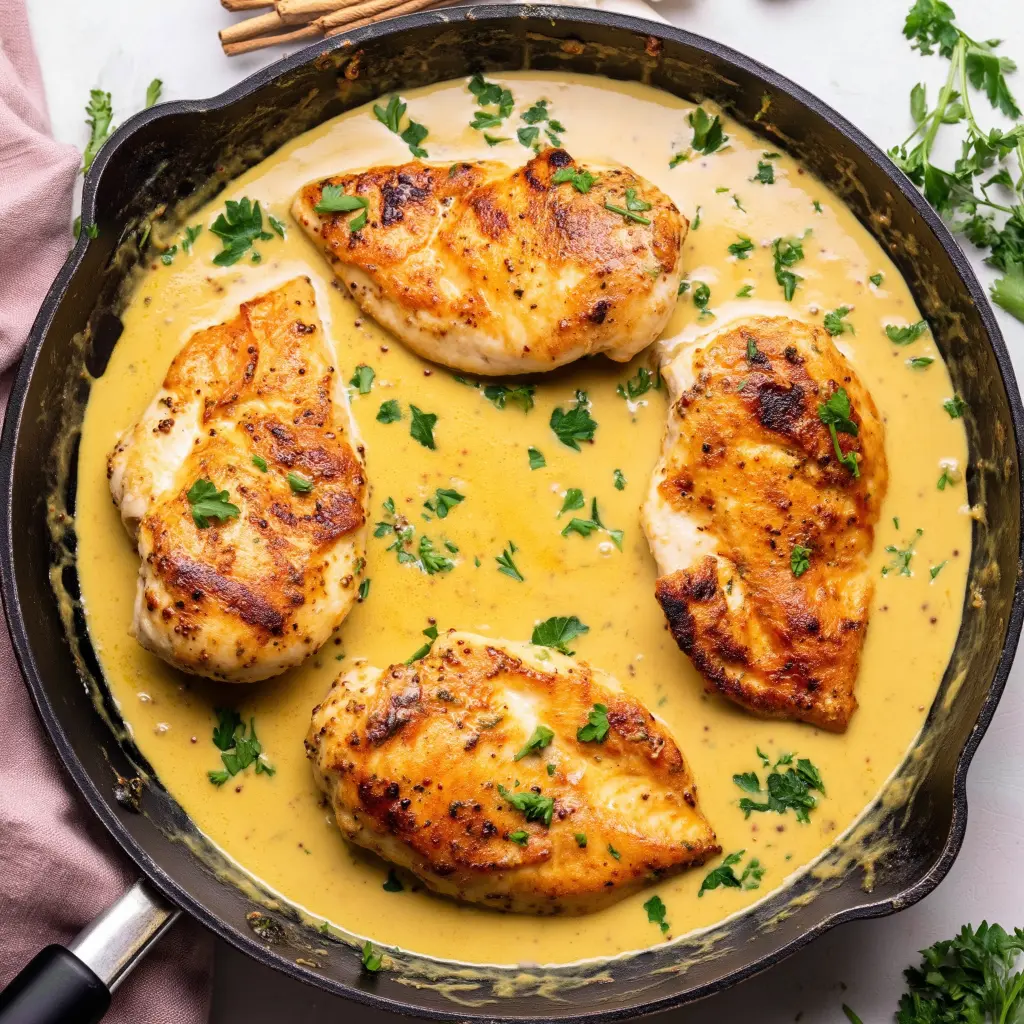
Dijon mustard chicken is one of those dinners that tastes like more effort than it takes. In about thirty minutes, you get tender pieces of chicken in a creamy pan sauce with shallots, broth, Dijon mustard, and parsley. It is rich enough to feel dinner-party ready, but the method is simple enough for a weeknight when you want something warm and a little comforting without spending all evening at the stove.
The recipe also keeps the process focused. The chicken breasts are halved so they cook quickly and evenly. A light flour coating helps them brown in the skillet and gives the sauce a head start on body. After that, most of the flavor comes from what builds in the pan: softened shallots, browned bits loosened from the bottom, broth, Dijon, cream, and the chicken itself returning to finish in the sauce.
That is why this dish works so well. It is not trying to do too much. The ingredient list is familiar, the pan sauce comes together fast, and the finished chicken feels polished without being fussy. It is the sort of meal that can sit next to mashed potatoes, rice, or a simple vegetable and still feel complete.
Chicken with Dijon sauce that tastes balanced
Creamy mustard sauces can sometimes lean too heavy or too sharp, but this one stays in a comfortable middle. Dijon mustard brings tang and depth, but the broth and cream soften it so the sauce feels rounded rather than harsh. Shallots add sweetness and a gentle savory note that keeps the sauce from tasting flat.
The chicken helps too. Since the pieces are cut into four even portions, they cook faster and stay more manageable in the pan. That matters in a skillet recipe because smaller, even pieces brown more predictably and warm through more gently once they go back into the sauce.
The flour coating is also doing quiet work. It helps create a golden crust on the chicken and gives the sauce a little extra body. You are not making a thick gravy here. It is more of a silky skillet sauce that clings to the meat instead of pooling like soup around it.
The ingredients that shape the dish
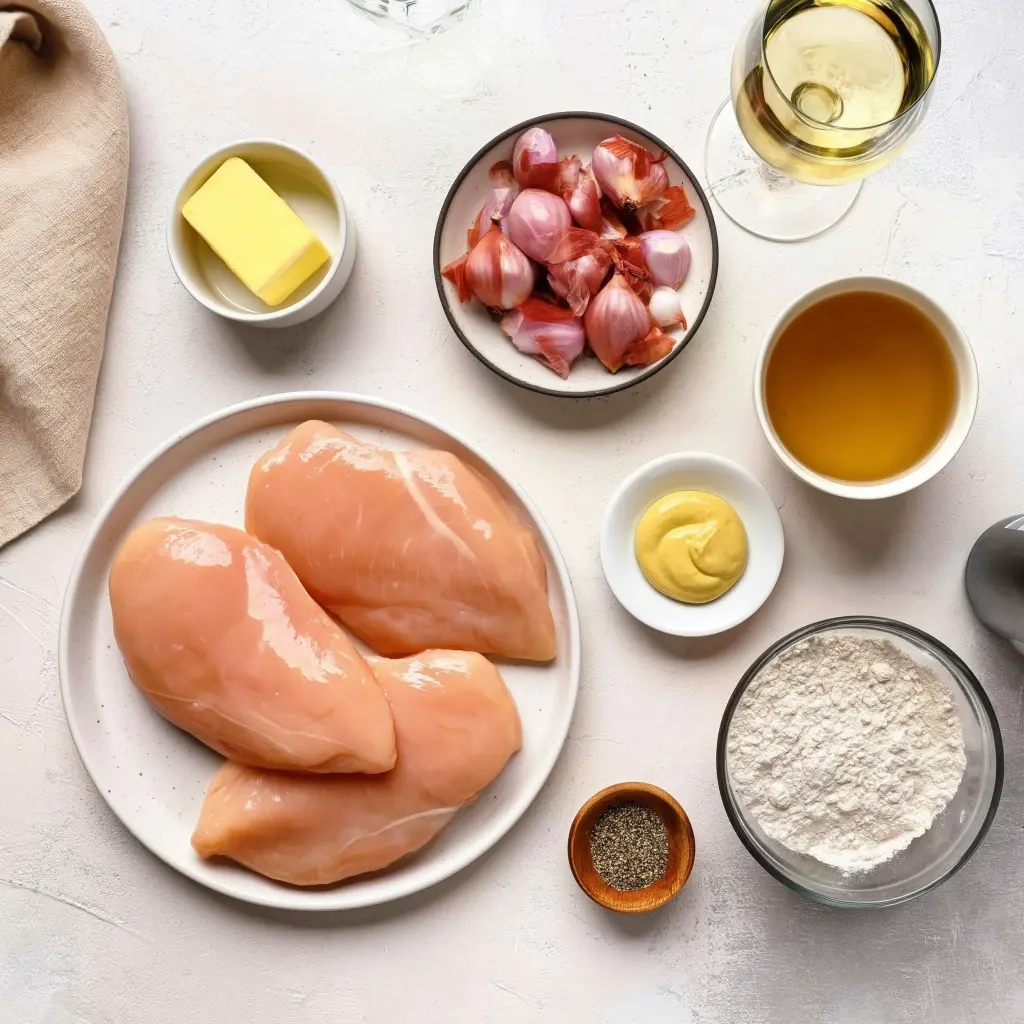
A recipe like this depends on a few basic ingredients doing their jobs well.
Chicken breasts
Two boneless, skinless chicken breasts become four even pieces once they are halved lengthwise. That step is worth doing carefully because even thickness helps the pieces cook at the same pace.
Flour, salt, and pepper
The flour mixture seasons the chicken and gives it a thin coating that helps it brown. It is a small step, but it sets up both flavor and texture.
Butter and shallots
Butter gives the pan sauce richness from the beginning, and the shallots add a mild onion flavor that feels softer and sweeter than a stronger onion would here.
Broth, Dijon mustard, and cream
This trio is the core of the sauce. The broth keeps it savory, the Dijon adds tang, and the cream rounds everything out into a smooth finish.
Parsley
The parsley is the final fresh note. It lightens the look of the dish and gives the finished plate a little color and lift.
How to make Dijon mustard chicken in one pan
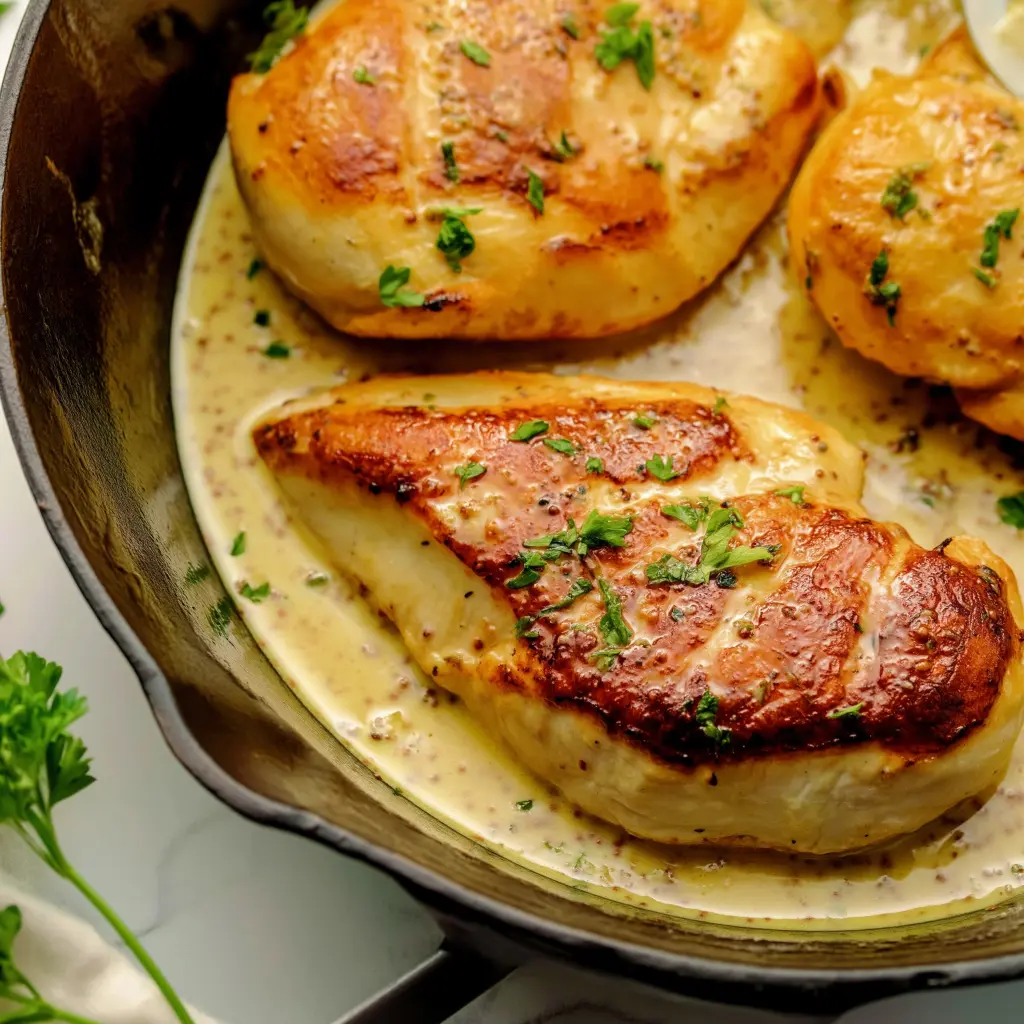
Start by halving each chicken breast lengthwise to create four even pieces. This is one of the most useful prep steps in the recipe because it shortens the cooking time and helps all the pieces finish together.
Whisk the flour, kosher salt, and black pepper in a shallow bowl. Dredge both sides of the chicken in that mixture and set the pieces aside. You want a light coating, not a thick crust.
Melt 2 tablespoons butter in a large skillet over medium-high heat. Add the chicken and sear both sides until golden. Once the chicken has good color, remove it from the pan and set it aside. It does not need to be fully finished at this point because it will return to the sauce later.
Add the remaining butter and the diced shallots to the same pan. Sauté until the shallots soften. This is where the sauce begins to pick up its base flavor.
Next comes the step that loosens the browned bits from the bottom of the skillet. Cook until that liquid reduces, scraping the pan as you go. Those browned bits matter because they bring in a deeper savory flavor that makes the finished sauce taste fuller.
Add the chicken broth, Dijon mustard, heavy cream, and extra salt and pepper to taste. Stir to combine, then simmer for 2 to 3 minutes until the sauce starts to thicken slightly. Return the chicken to the pan and cook until the sauce thickens more and the chicken is warmed through to 165°F.
Finish with chopped parsley and serve while the sauce is still smooth and warm.
The secret to a silky Dijon sauce
A sauce like this does not need many tricks, but a few details make a big difference. First, do not rush the browning step on the chicken. Good color on the chicken means more flavor in the pan, and more flavor in the pan means a better sauce.
Second, scrape up the browned bits when you add the pan liquid. Those bits are one of the main reasons the sauce tastes like it simmered longer than it did.
Third, do not overheat the pan before the cream goes in. The notes point this out for a reason. A steady simmer is enough. You want the sauce to come together smoothly, not boil hard.
The final good habit is tasting before serving. Dijon can vary in sharpness, broth can vary in salt, and chicken pieces can vary slightly in size. A quick taste near the end lets you adjust the seasoning so the sauce feels balanced.
The note about letting the chicken rest in the warm sauce for 3 to 5 minutes off the heat is another strong one. That short rest gives the sauce a chance to settle and the chicken a chance to stay juicy.
Easy swaps, make-ahead notes, and serving ideas
The recipe card gives you a few helpful ways to adjust this dinner without changing its shape too much. Boneless, skinless chicken thighs can be used instead of breasts, though the cook time will be a little longer. That is good to know if thighs are what you keep on hand.
For the mustard itself, the notes suggest using 1 tablespoon Dijon and 1 tablespoon whole-grain mustard if you want a more rustic look and a little extra texture in the sauce. That is a small change, but it gives the final dish a different feel on the plate.
If you want to prep ahead, the recipe says you can sear the chicken and prep the sauce up to a day in advance, then chill them separately. When it is time to eat, gently reheat the sauce and add the chicken back in. That can make dinner feel much easier on a busy night.
Leftovers keep in an airtight container in the refrigerator for up to 3 days, which makes this a practical dinner for smaller households too.
Questions that usually come up
A common question is whether this sauce is very strong from the mustard. It has a clear mustard flavor, but the cream and broth soften it. The result is rich and tangy, not overpowering.
Another question is whether the chicken has to be cut in half. It really helps. Thinner, even pieces cook faster and more evenly, which suits a quick skillet recipe like this one.
People also ask how to tell when the chicken is done without drying it out. The recipe gives a clear answer: cook until the chicken is warmed through to 165°F. That gives you a concrete stopping point.
Then there is the texture question. If the sauce looks a little thin at first, that is normal. It thickens as it simmers and again after the chicken goes back in. Letting it sit for a short rest off the heat helps even more.
Dijon mustard chicken is a strong example of how a short ingredient list can still feel generous and dinner-worthy. You get golden chicken, a creamy sauce, and a one-pan method that keeps cleanup manageable. That is a very good trade for thirty minutes in the kitchen. If this kind of chicken dinner is your speed, recipes like Marry Me Chicken, one-pot creamy garlic parmesan chicken, or the site’s broader dinner collection fit the same cozy lane.

- 15-Minute Chicken Caesar Wrap - May 11, 2026
- Nutella Stuffed Cookies - May 10, 2026
- Honey Glazed Salmon That Makes Dinner Feel Easy - April 28, 2026