Skip to content


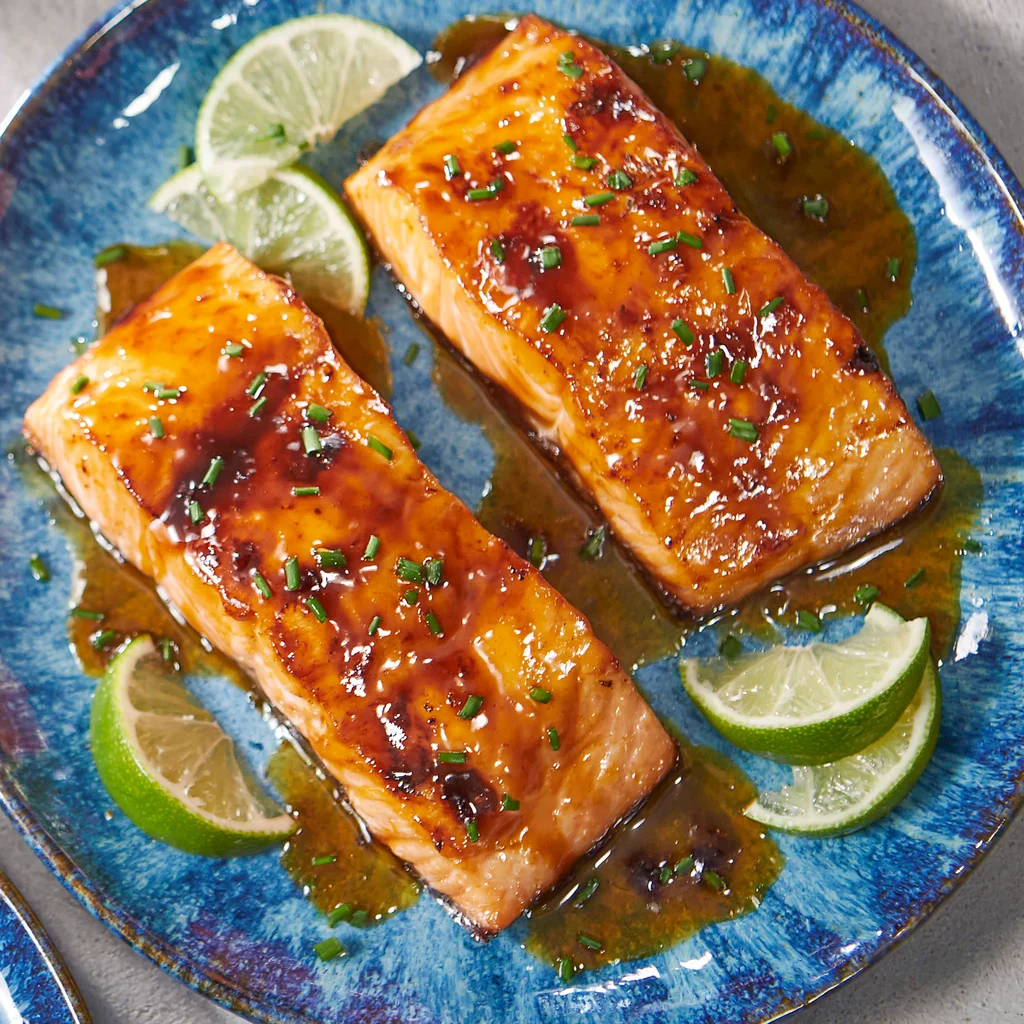
Honey glazed salmon is one of those dinners that looks glossy and special on the plate, but the actual cooking is simple enough for a busy weeknight. The salmon is seasoned with salt and pepper, brushed with a quick honey and soy sauce glaze, then pan fried until the outside is caramelized and the center flakes easily.
The sauce is the part that makes this honey glazed salmon so good. Honey brings sweetness, soy sauce or coconut aminos adds savory depth, garlic warms everything up, and lime juice at the end keeps the glaze from feeling too heavy. Butter melts into the skillet sauce, giving it a rich finish that clings to each piece of fish.
This recipe is fast, too. With 10 minutes of prep and 10 minutes of cooking, the whole dish comes together in 20 minutes. That makes honey glazed salmon a strong choice when you want something homemade without spending the whole evening in the kitchen.
Why You Will Love This Honey Glazed Salmon Recipe
This honey glazed salmon recipe works because the flavor is big, but the ingredient list stays short. You do not need a long marinade or a complicated sauce. The glaze is stirred together in a measuring cup, brushed right onto the salmon, and finished in the same skillet.
It is also a flexible dinner. Soy sauce gives the glaze a classic savory flavor, while coconut aminos can be used as the listed swap. Fresh lime juice at the end adds brightness, and chopped chives can be used as a garnish if you want a fresh green finish.
The cooking time is quick, which is helpful with salmon. Salmon can dry out when it sits too long over heat, so the short skillet method helps keep the inside tender while giving the glaze enough time to caramelize.
Ingredients and Substitutions
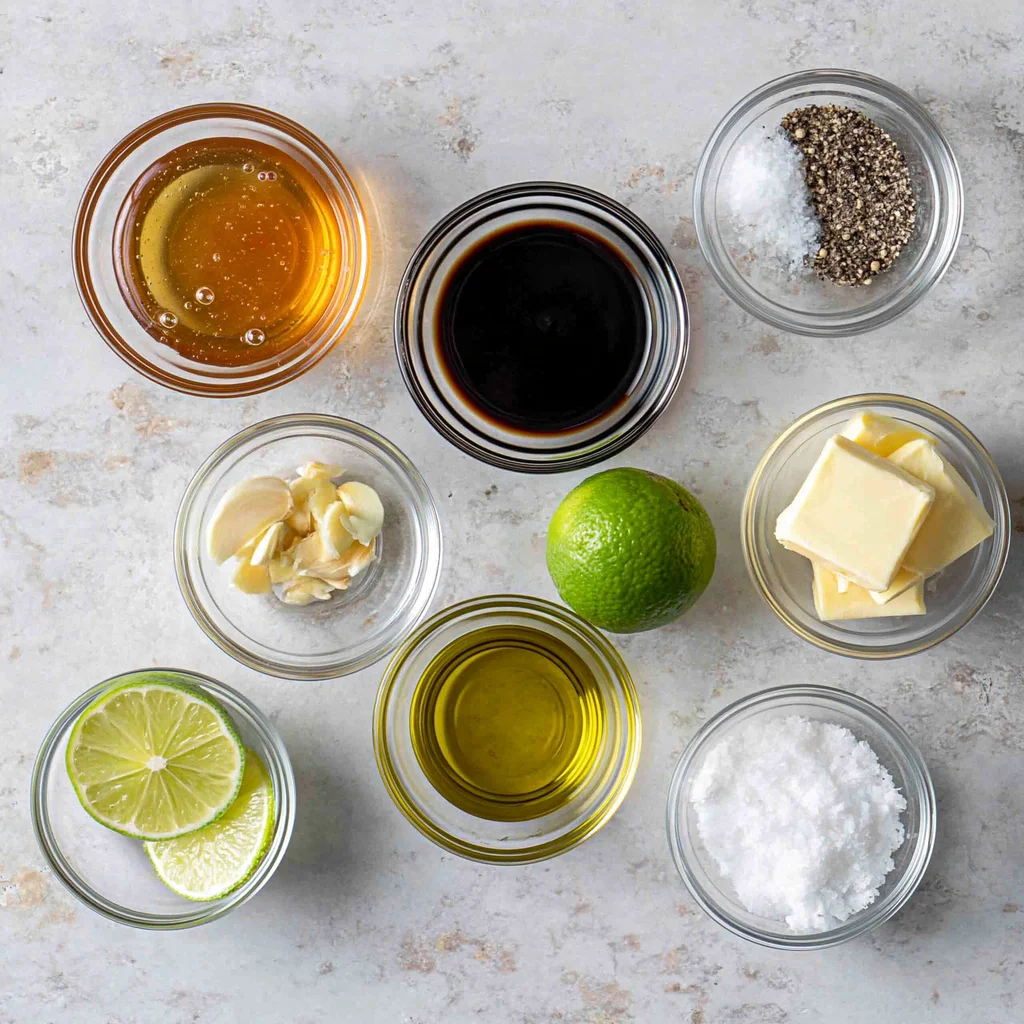
The ingredients for honey glazed salmon are simple, but each one has a clear job.
Honey: Honey is the base of the glaze. It gives the salmon its sweet, sticky coating and helps the outside caramelize in the skillet.
Soy sauce or coconut aminos: Soy sauce balances the honey with savory flavor. Coconut aminos are listed as an alternative and will still give the glaze a salty-sweet profile.
Olive oil: Olive oil helps the salmon cook in the skillet without sticking and supports even browning.
Salmon filets: This recipe uses 4 salmon filets. The instructions specify boneless, skinless salmon filets.
Salt and black pepper: These season both sides of the fish before it goes into the skillet.
Garlic: Minced garlic cooks with the butter and sauce, adding a warm, savory flavor.
Butter: Butter melts into the skillet sauce after the salmon has cooked on both sides. It helps the glaze thicken slightly and makes the sauce richer.
Lime juice: Fresh lime juice is squeezed over the glazed salmon before serving. It cuts through the sweetness and makes the finished dish taste brighter.
Chives, optional: Chopped chives can be used as a garnish if desired.
Kitchen Tools You Will Need
A large non-stick skillet is the main tool for this honey glazed salmon. The recipe also uses a measuring cup to mix the glaze and a pastry brush or similar kitchen brush to coat the salmon before and during cooking.
If your skillet is small, cook the salmon in batches. Crowding the pan can make the fish harder to turn and may keep the glaze from caramelizing well.
How To Cook Honey Glazed Salmon in a Skillet
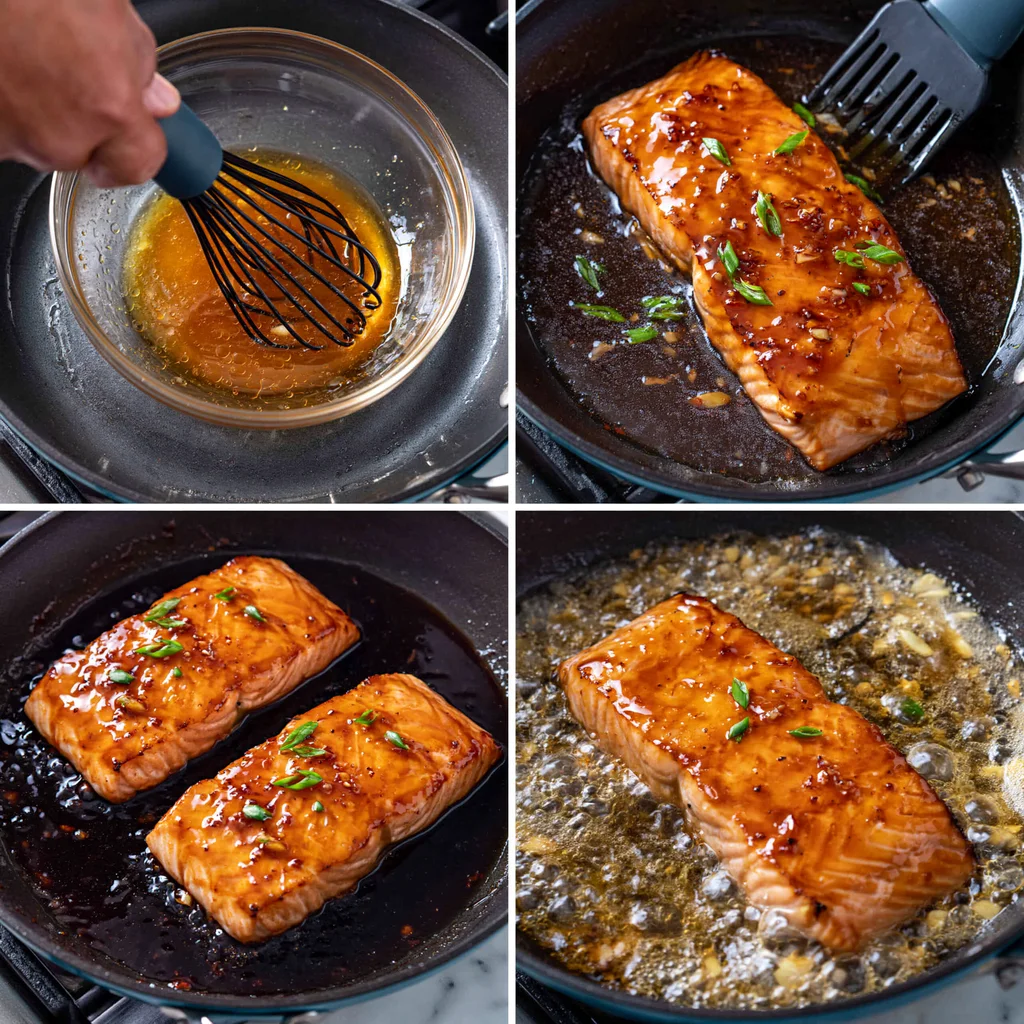
Start by making the glaze. In a measuring cup, combine 1/4 cup honey and 2 tablespoons soy sauce. Stir until the mixture is well combined, then set it aside.
Pat the salmon filets dry before seasoning. This removes excess moisture from the surface, which helps the glaze stick and helps the salmon brown better in the skillet. Season both sides of the boneless, skinless salmon filets with salt and black pepper.
Heat a large non-stick skillet over medium heat and add the olive oil. Brush the first side of the salmon generously with half of the glaze. Once the oil is hot, add the salmon to the skillet with the glazed side facing down.
After the salmon is in the skillet, brush the second side with the remaining glaze. Sauté the salmon on the first side for 3 minutes, then turn it and sauté the second side for another 3 minutes.
Add the butter and minced garlic to the skillet. Cook until the butter melts and the sauce thickens slightly. As the sauce comes together, baste the salmon with it so the glaze coats the top of the fish.
The honey glaze should be caramelized, and the salmon should be just cooked through. When flaked, the inside should be opaque. Watch the heat carefully because honey can burn if the skillet gets too hot.
Remove the salmon from the skillet and repeat with the remaining salmon filets if you are cooking in batches. To serve, squeeze fresh lime juice over the glazed salmon and garnish with chopped chives if desired.
Recipe Notes and Tips
Patting the salmon dry is a small step that makes a real difference. Extra moisture on the surface can keep the salmon from browning and may make the glaze slide off instead of clinging to the fish.
Keep the skillet at medium to medium-high heat, not screaming hot. The recipe notes that if the heat is too high, the honey glaze can burn. You want caramelized, not scorched.
If you are cooking more salmon than your skillet comfortably holds, work in batches. This gives each filet enough room and makes it easier to turn the fish without breaking it.
Use the visual cue from the recipe card: the salmon is ready when it flakes easily with a fork and is opaque pink throughout. Be careful not to overcook it, because salmon can turn dry quickly.
Basting is also worth doing. Once the butter, garlic, and glaze come together in the skillet, spooning that sauce over the salmon gives the top a shiny coating and spreads the garlic flavor across the fish.
What Do You Serve It With?
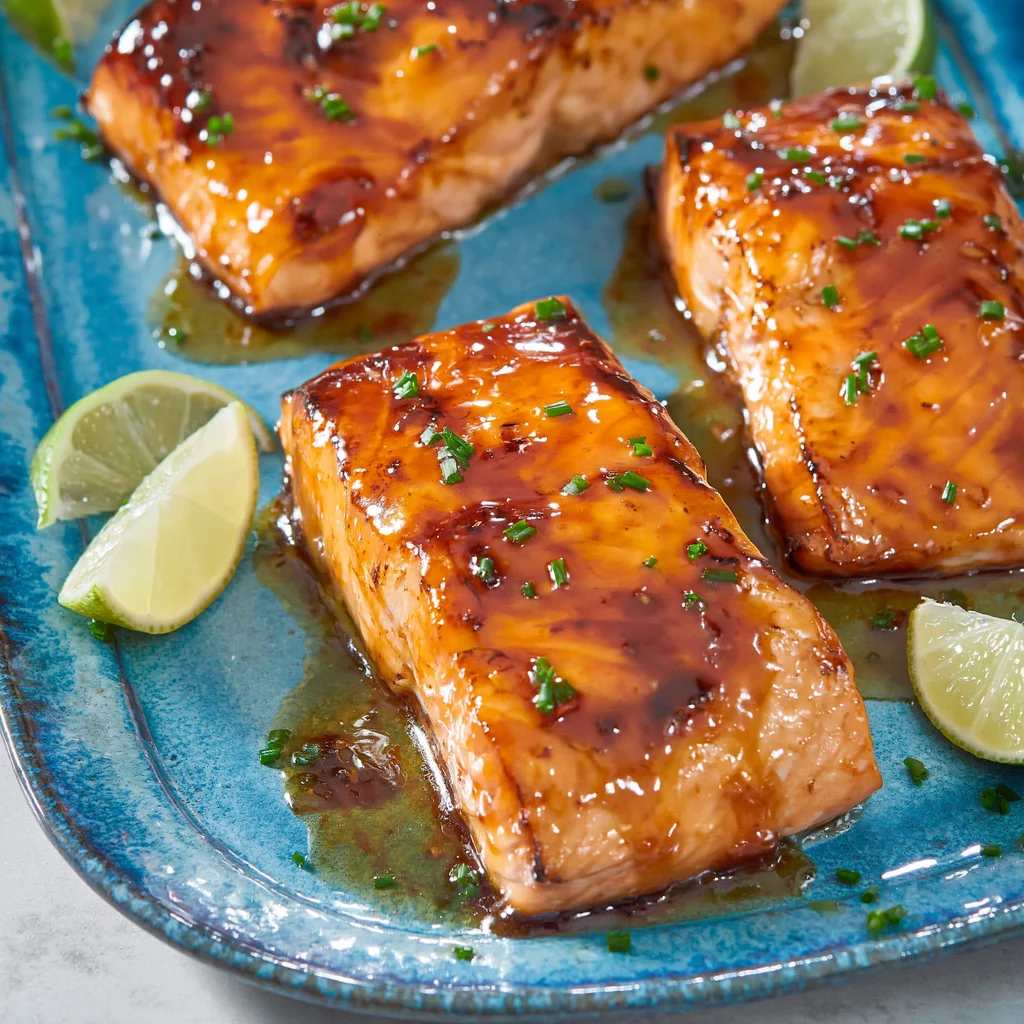
Honey glazed salmon pairs well with simple sides because the sauce already has bold flavor. Steamed rice is a natural choice because it catches the extra glaze from the skillet. A bowl of plain rice also balances the sweet and savory sauce without competing with it.
For vegetables, keep things fresh and simple. Green beans, broccoli, asparagus, or a crisp cucumber salad would all work well with the lime and garlic in the glaze. Roasted vegetables are another good option, especially if you want a more filling dinner.
You can also serve this salmon with noodles or a quick grain bowl. Add the salmon on top, spoon over a little extra pan sauce, and finish with lime juice and chopped chives if using.
Storing Suggestions
The supplied recipe card does not include exact storage times, so avoid guessing on a set number of days. For leftovers, let the salmon cool, place it in a covered container, and keep it chilled.
When reheating honey glazed salmon, use gentle heat so the fish does not dry out and the glaze does not burn. A skillet over low heat can help warm the salmon slowly. You can also enjoy leftovers cold over a salad or grain bowl if the salmon has been stored properly. For general seafood storage and handling guidance, the FDA seafood safety guide is a helpful reference.
Recipe FAQs
Can I use coconut aminos instead of soy sauce?
Yes. The ingredient list includes soy sauce or coconut aminos, so either one can be used in the glaze.
How do I know when honey glazed salmon is done?
The salmon is ready when it flakes easily with a fork and is an opaque pink color throughout. The glaze should be caramelized, and the inside should be just cooked through.
Why did my honey glaze burn?
The skillet may have been too hot. Honey can burn quickly, so keep the heat around medium to medium-high and watch the glaze closely as it caramelizes.
Should I pat salmon dry before cooking?
Yes. The recipe notes recommend patting the salmon filets dry before seasoning to remove excess moisture.
Can I cook the salmon in batches?
Yes. If your skillet is small, cook the salmon in a couple of batches so each filet has enough room.
More Fish Dinner Ideas
This honey glazed salmon is a strong weeknight fish dinner because it is fast, flavorful, and cooked in one skillet. For another meal, you can use the same dinner style: a quick-cooking fish filet, a simple sauce, and a fresh finish like citrus juice or herbs.
The key is to keep the process practical. Choose sides that cook quickly, prep the glaze before the salmon hits the pan, and keep a close eye on the fish as it cooks. That way, dinner feels calm instead of rushed. For another salmon idea, try teriyaki glazed salmon with steamed broccoli, or pair a seafood night with creamy garlic butter shrimp pasta. You can also read more about omega-3s in fish from Mayo Clinic.
Final Thoughts
Honey glazed salmon is the kind of recipe that earns a regular spot in the dinner rotation. It gives you sweet, savory, garlicky flavor in about 20 minutes, and the skillet method keeps the process straightforward.
The most important things are simple: pat the salmon dry, keep the heat under control, avoid overcooking, and finish with fresh lime juice. Do that, and you get glossy, caramelized honey glazed salmon with tender fish inside and a sauce that makes every bite count.
Honey Glazed Salmon
Equipment
- Measuring cup
- Large non-stick skillet
- Kitchen brush
Ingredients
- 1/2 cup honey
- 3 Tablespoon soy sauce or coconut aminos
- 2 Tablespoon olive oil
- 4 salmon filets
- 1/2 tsp salt
- 1/4 tsp black pepper
- 4 cloves garlic minced
- 4 Tablespoon butter
- 1 lime juice
Instructions
To make the glaze
- In a measuring cup, combine 1/4 cup honey and 2 Tbsp soy sauce. Stir until well combined and set aside.
To make the salmon
- Season both sides of your boneless, skinless salmon filets with salt and pepper.
- Heat a large non-stick skillet over medium heat and add 2 Tbsp olive oil.
- Brush the first side of salmon generously with half of the glaze and once oil is hot, add salmon to the skillet (glaze-side-down). In the skillet, brush the second side generously with remaining glaze. Sauté salmon on the first side for 3 minutes, turn and sauté second side another 3 minutes. Add butter and minced garlic and cook until butter is melted and sauce thickens a little bit. Baste salmon with the sauce.
- Glaze should be caramelized and salmon should be just cooked through and opaque inside when flaked. Be careful not to overcook the salmon and burn the sauce/glaze.
- Remove salmon from skillet and repeat with remaining salmon filets.
- Squeeze fresh lime juice over the glazed salmon to serve and garnish with chopped chives if desired.
Notes

- 15-Minute Chicken Caesar Wrap - May 11, 2026
- Nutella Stuffed Cookies - May 10, 2026
- Honey Glazed Salmon That Makes Dinner Feel Easy - April 28, 2026