Skip to content


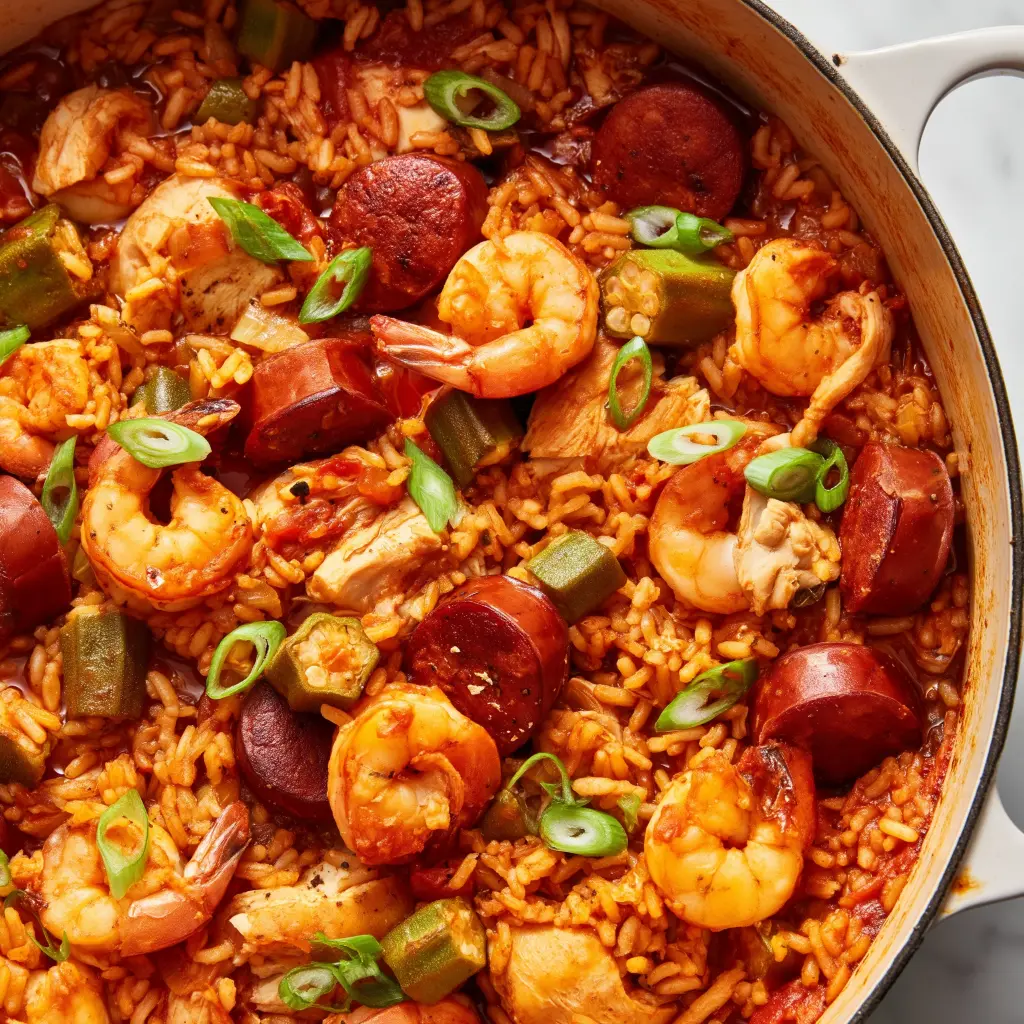
Jambalaya is the kind of one-pot dinner that can carry a whole evening on its own. Chicken, shrimp, and andouille sausage bring depth, while rice, tomatoes, Cajun seasoning, and vegetables turn the pot into something that feels layered instead of crowded. A good jambalaya tastes full, but each part still has a place.
This version keeps the method steady and clear. You brown the meats first, soften the vegetables, toast the rice with the seasonings, and let the stock do the rest. If shrimp-forward dinners already appeal to you, creamy garlic butter shrimp pasta fits a very different mood with some of that same savory pull.
Jambalaya Ingredients
The chicken gives the pot body, the andouille sausage adds a smoky note, and the shrimp brightens the last few bites. Onion, bell peppers, celery, jalapeño, and garlic form the base that keeps the rice from tasting plain. Crushed tomatoes and stock do the heavy lifting as the rice cooks, while thyme, bay leaf, and Cajun seasoning shape the final flavor.
Okra is also a nice touch if you like it. It adds another vegetable layer and suits jambalaya well. The lemon juice at the end matters too. By the time the pot is ready, everything has cooked together long enough that a little acidity wakes the whole pan back up.
How Jambalaya Comes Together
Start by browning the chicken in a little of the oil and setting it aside. Brown the sausage next, then sauté the okra separately if you are using it. Those early steps build flavor in the pot before the rice ever goes in.
Once the onion, bell peppers, celery, jalapeño, and garlic have softened, stir in the rice, Cajun seasoning, thyme, and bay leaf. Toasting the rice briefly helps it take on flavor from the start. Then add the tomatoes and stock, cover, and simmer until the rice is tender.
At the end, return the chicken, sausage, shrimp, and okra to the pot. The shrimp only needs the residual heat and a short covered rest to finish. If you like a quick doneness check for seafood, FDA safe food handling guidance is a helpful reference for cues such as shrimp turning pearly and opaque.
Recipe Tips
The main thing with jambalaya is not to rush the first few stages. Color on the chicken and sausage adds depth, and a short toast on the rice helps the pot feel more rounded later. It also helps to begin with 3 cups of stock, then add more only if the rice needs it. That keeps the final texture hearty instead of loose.
Seasoning should come last, not first. Cajun seasoning blends can vary, and the sausage and stock may already bring plenty of salt. A final taste once the lemon juice is in gives you a much better sense of what the pot still needs.
Jambalaya Variations
You can make this jambalaya with chicken breasts or thighs, depending on what you have. Large shrimp give the pot a chunkier feel, while smaller shrimp spread through the rice more evenly. If okra is not your favorite, the dish still works because the vegetables and proteins already bring plenty of body.
For other dinner ideas that lean on big flavor in a single pan or pot, stuffed bell peppers with ground beef and rice and spaghetti aglio e olio with shrimp are both useful to keep in rotation.
Storage and Leftover Notes
Jambalaya leftovers can be very good, but this is the kind of dish you want to cool and chill without dragging your feet. Since cooked rice and seafood are both in the pot, FoodSafety.gov’s cooling and leftover guidance is worth keeping in mind when portioning the pot after dinner.

- 15-Minute Chicken Caesar Wrap - May 11, 2026
- Nutella Stuffed Cookies - May 10, 2026
- Honey Glazed Salmon That Makes Dinner Feel Easy - April 28, 2026