Skip to content


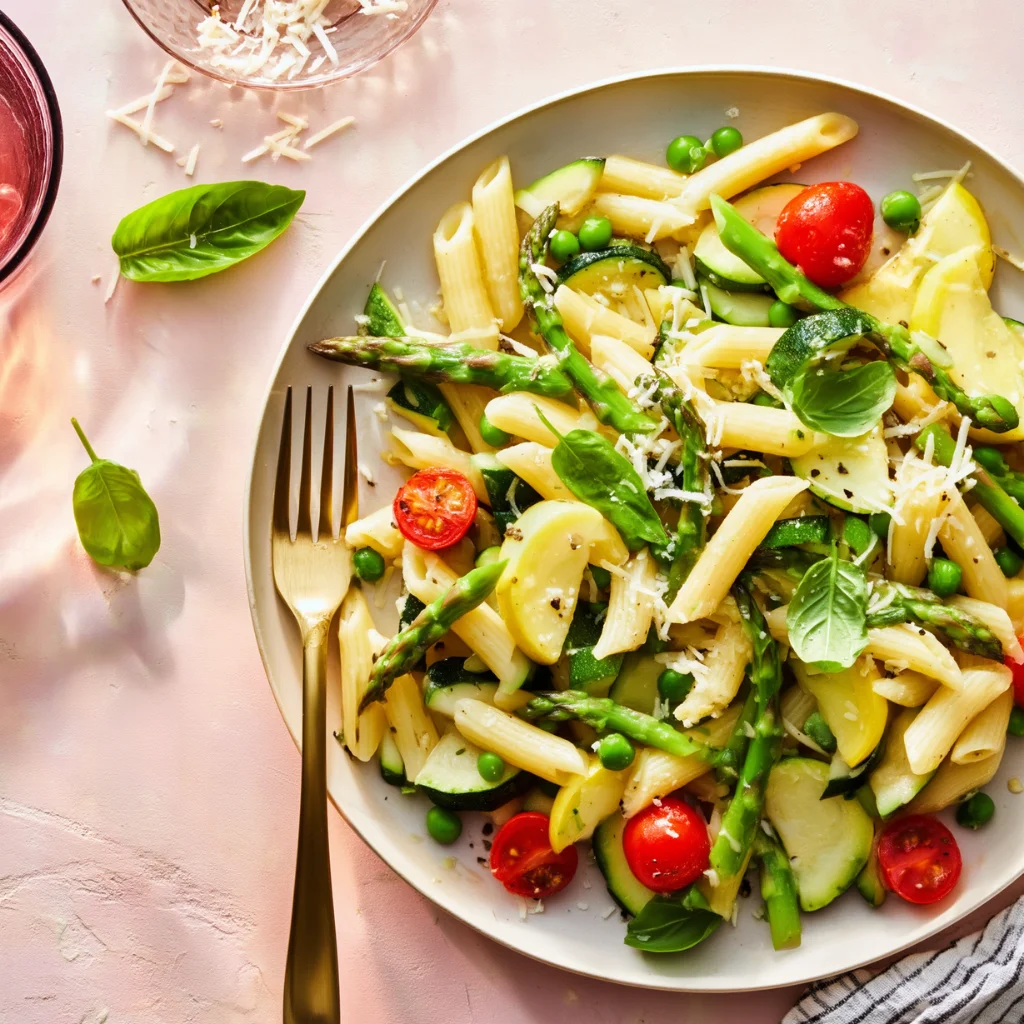
Pasta primavera is the kind of dinner that feels fresh, colorful, and easy to bring to the table. This version pairs penne with zucchini, yellow squash, asparagus, peas, cherry tomatoes, red onion, basil, lemon juice, and pecorino, so every forkful has a mix of tender pasta and bright vegetables. It is simple enough for a weeknight, but it still feels like something a little special.
What makes this pasta primavera recipe so appealing is the balance. The vegetables stay vibrant, the pecorino gives the pasta a light savory finish, and the lemon keeps the whole dish from feeling heavy. A pinch of red pepper flakes adds gentle heat, while fresh basil brings in that final layer that makes the bowl smell as good as it tastes.
This is also a very practical recipe. The steps are clear, the ingredient list is approachable, and the full dish comes together in 30 minutes. You cook the pasta, sauté the vegetables, and toss everything together in one skillet. That means less fuss, less cleanup, and a dinner that still looks lovely when it lands on the table.
It also fits right into the kind of meal people want to make again. If you already enjoy pasta dinners like creamy garlic butter shrimp pasta or simple bowls such as spaghetti aglio e olio with shrimp, this pasta primavera brings that same comfort with a lighter, garden-filled twist.
Pasta Primavera Recipe Ingredients
The beauty of pasta primavera is that the ingredients are familiar, but the finished dish still feels full of life. Penne works especially well here because the short tubes hold onto the cheese, lemon, and little bits of sautéed vegetables. Every bite feels balanced instead of giving you pasta in one forkful and vegetables in the next.
Olive oil and sliced garlic create the base. Once they hit the warm skillet, the aroma sets the tone for the whole dish. From there, the recipe builds with yellow squash, zucchini, asparagus, cherry tomatoes, and red onion. That combination gives you sweetness, softness, a little crunch, and plenty of color. The peas go in near the end, which helps them keep their bright look and gentle sweetness.
Pecorino cheese melts into the warm pasta and vegetables, making a light coating rather than a thick sauce. Lemon juice keeps the flavor lively and gives the dish that clean finish pasta primavera is known for. Fresh basil adds a soft herbal note, and the optional tarragon gives the recipe an extra layer that makes it stand out in the best way.
The tarragon is worth mentioning because it changes the dish in a subtle but lovely way. It does not overpower the vegetables or the cheese. Instead, it adds a gentle herbal note that makes the pasta taste a little more rounded. If you have it on hand, it is a very nice addition.
Because the ingredient list is so simple, each part matters. Fresh vegetables, good olive oil, bright lemon juice, and a generous handful of basil all help this pasta primavera taste clear and fresh. There is no heavy sauce hiding in the background, so each ingredient gets its moment.
How to Make Pasta Primavera
Start by bringing a large pot of salted water to a boil. Cook the penne according to the package directions until al dente, then drain it and toss it with a light drizzle of olive oil. That small step keeps the pasta from sticking while you finish the vegetables.
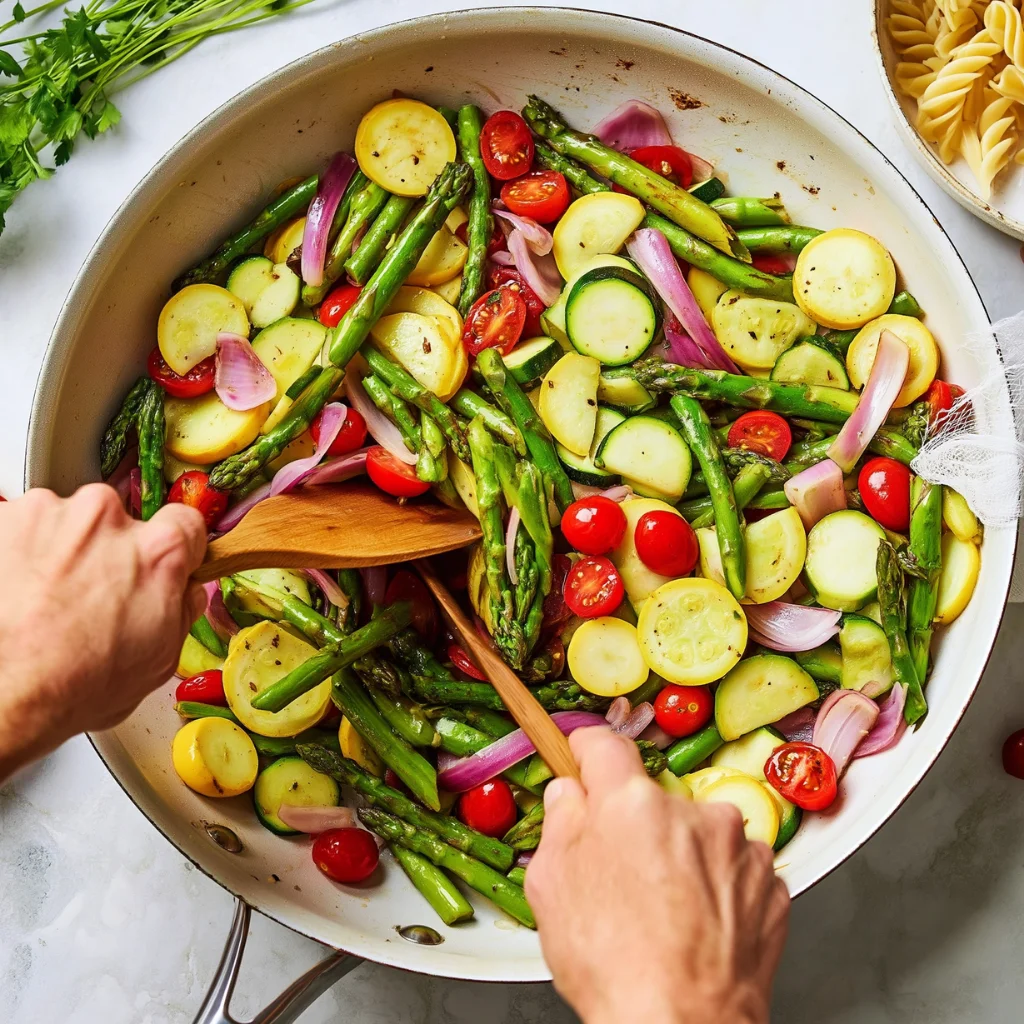
Next, heat the olive oil in a large deep skillet over medium heat. Add the garlic, yellow squash, zucchini, asparagus, cherry tomatoes, red onion, sea salt, and a few grinds of black pepper. Sauté the vegetables for 3 to 4 minutes, just until they turn tender. You do not want them cooked down too much. The goal is to keep some texture so the pasta still feels bright and full of contrast.
Once the vegetables are ready, add the cooked penne to the skillet along with the peas, grated pecorino, lemon juice, and a pinch of red pepper flakes. Toss everything together so the cheese lightly coats the pasta and the lemon works through the vegetables. At this point, the dish starts to come together fast, and the skillet will look full, colorful, and ready for the final herbs.
Stir in the basil and the tarragon, if you are using it. Adding the herbs at the end helps them stay fresh and fragrant. Taste the pasta, adjust the seasoning if needed, and finish with more basil before serving.
This method is one of the strongest things about the recipe. You are not making a separate sauce or managing several pans at once. The pasta and vegetables come together in a straightforward way, which makes the whole process feel easy to follow. That is especially helpful on busy evenings when you still want dinner to feel homemade.
It helps to prep all of the vegetables before you begin cooking. Since the skillet step moves quickly, having the zucchini, squash, asparagus, onion, and tomatoes ready makes the recipe feel smooth from start to finish. Once everything is chopped, dinner comes together without much stress.
Pasta Primavera Serving Suggestions
Pasta primavera is satisfying on its own, but it also works well with a few simple sides. A crisp salad makes a nice match because it keeps the meal feeling fresh from beginning to end. Something like a wrap or salad-style lunch can also give you ideas for keeping vegetable-forward meals in the mix, such as this grilled chicken Caesar salad wrap.
Warm bread is another good choice, especially when you want something to catch the last bits of lemony cheese and vegetable juices left in the bowl. If you are putting together a fuller dinner spread, a vegetable side can also work nicely. For a similar dinner idea with vegetables at the center, you might like lemon herb baked salmon with roasted veggies.
For serving, a final shower of pecorino, a little extra basil, and a few grinds of black pepper go a long way. Those finishing touches make the bowl look fresh and inviting without adding extra work. You can also bring red pepper flakes to the table so everyone can adjust the heat to their liking.
This recipe is especially nice in spring and summer when asparagus, zucchini, squash, basil, and peas feel right at home. Still, because the ingredients are easy to find, it is also a reliable dinner for any time of year when you want something lighter than a rich cream-based pasta.
FAQs
What is pasta primavera?
Pasta primavera is a pasta dish made with fresh vegetables and a light sauce or coating. In this version, the sauce comes from olive oil, pecorino, lemon juice, and the juices released by the vegetables as they cook.
Can I leave out the tarragon?
Yes. The tarragon is optional, so you can skip it if you do not have it. The pasta will still taste fresh and balanced with the basil, lemon, vegetables, and pecorino.
What does al dente mean?
Al dente means the pasta is cooked until tender but still has a slight bite. That texture works well here because the pasta is tossed again in the skillet with the vegetables.
Is pasta primavera heavy?
No. This recipe stays on the lighter side because it uses olive oil, lemon juice, herbs, and cheese instead of a rich cream sauce.
How should I store leftovers?
Let the pasta cool, then refrigerate it in a covered container. For general leftover storage guidance and safe timing, see the USDA leftovers and food safety page and the FoodKeeper storage guide.
Conclusion
Pasta primavera is one of those recipes that proves dinner does not need to be complicated to feel good. The penne, vegetables, basil, lemon juice, and pecorino work together in a way that feels fresh, simple, and very easy to enjoy. It is colorful in the skillet, inviting in the bowl, and practical enough for a regular weeknight rotation.
If you want a pasta dinner that feels lighter but still satisfying, this recipe is a strong one to keep nearby. It comes together quickly, uses familiar ingredients, and brings plenty of fresh flavor to the table without asking for much extra work.

- 15-Minute Chicken Caesar Wrap - May 11, 2026
- Nutella Stuffed Cookies - May 10, 2026
- Honey Glazed Salmon That Makes Dinner Feel Easy - April 28, 2026