Skip to content


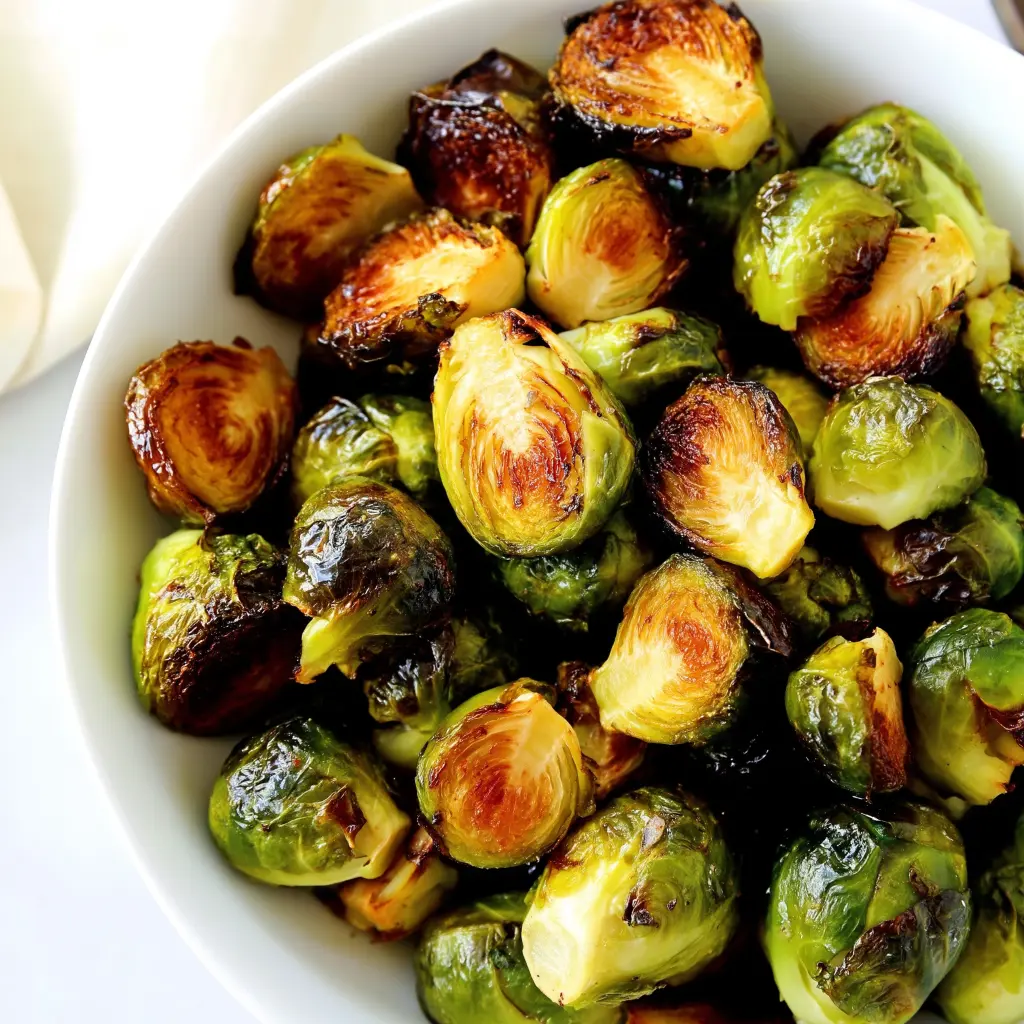
Roasted Brussels Sprouts are proof that a very short ingredient list can still turn into something deeply satisfying. When Brussels sprouts are roasted at a high temperature with olive oil, salt, and pepper, the outer leaves crisp, the cut sides brown, and the centers soften just enough to stay tender. That mix of textures is what makes them so appealing. They go from a vegetable some people tolerate to a side dish people actually reach for.
This recipe is also a strong reminder that method matters. Brussels sprouts do not need a long list of extras to taste good. They need enough heat, enough room on the pan, and enough time to brown properly. Once that happens, their flavor changes. The bitterness softens, the natural sweetness comes forward, and the toasted edges bring in the kind of flavor you simply cannot get from steaming or boiling.
Because this recipe uses only Brussels sprouts, olive oil, sea salt, and freshly cracked black pepper, it fits into all kinds of meals. It is easy on a weeknight, just as welcome on a holiday table, and simple enough to pair with almost any main dish. If you have struggled with Brussels sprouts in the past, this is the kind of recipe that can change your mind.
Why This Recipe Works
The biggest reason this recipe works is that it keeps the focus on texture. Brussels sprouts become far more inviting when they are lightly charred on the outside and toasted on the cut side. That browning gives them flavor and keeps them from tasting flat or watery.
Another reason is the cut-side-down step. It sounds small, but it makes a real difference. When the halved Brussels sprouts rest cut-side-down on the hot baking sheet, that surface gets direct contact with the heat. That is how you build a deep golden color and a stronger roasted taste.
The oil also matters here, even though there are only two tablespoons for two pounds of Brussels sprouts. You want enough oil to coat them evenly so the seasoning sticks and the edges roast rather than dry out. Once the sprouts are spread into an even layer, the oven can do its job.
Ingredient Notes
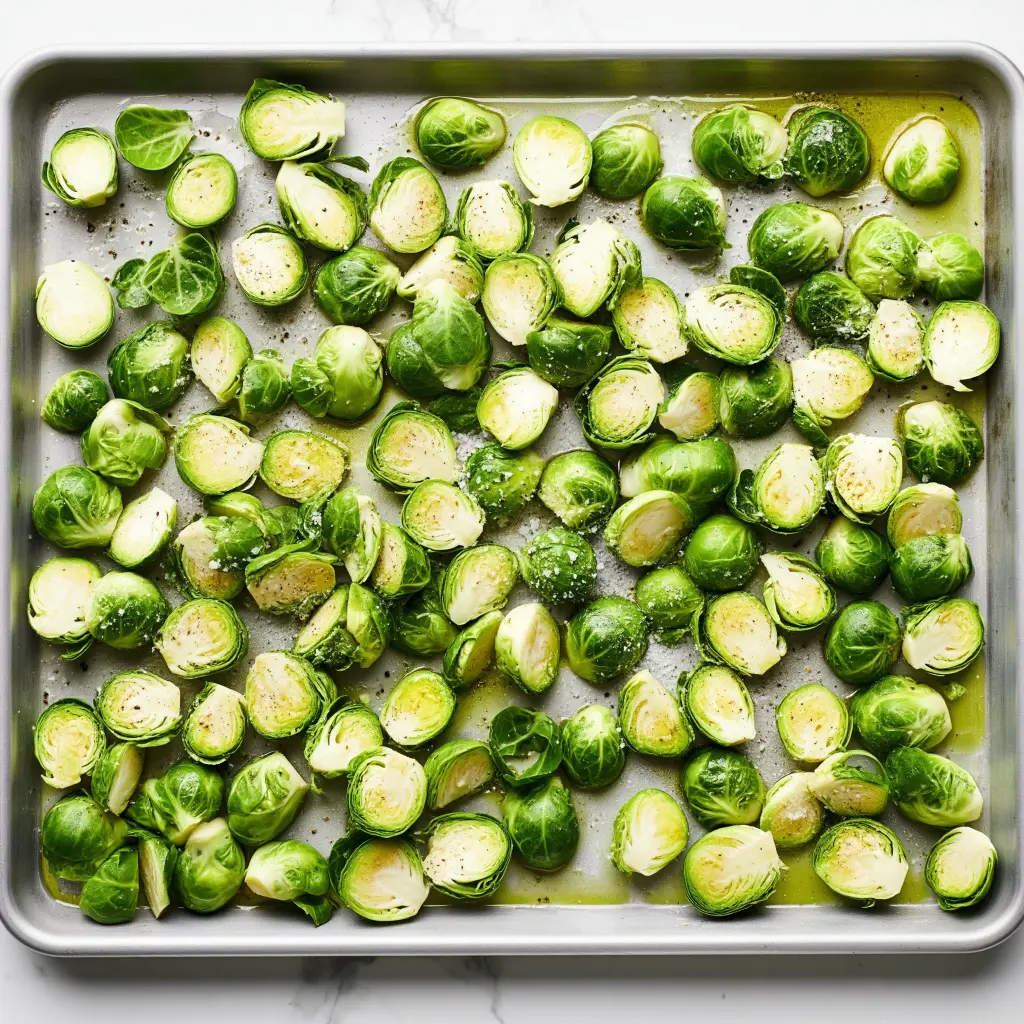
With a recipe this simple, every ingredient has a role. Brussels sprouts are the star, so trimming and halving them evenly helps them roast at the same pace. If some are much larger than others, cut those into quarters so you do not end up with a mix of burnt leaves and undercooked centers.
Olive oil adds just enough richness to help the sprouts brown and roast well. Sea salt and freshly cracked black pepper keep the seasoning clean and straightforward. Since there are so few ingredients, season with a confident hand. A timid sprinkle can leave the whole tray tasting dull.
This is one of those side dishes where the raw ingredients may not look like much at first, but once they come out of the oven, the change is dramatic. The leaves curl and crisp, the bottoms turn toasted and savory, and the whole pan smells warm and nutty.
How to Roast Brussels Sprouts for the Best Texture
Start by heating the oven to 400°F. A hot oven is key because it pushes the Brussels sprouts toward browning instead of slow softening. Spread the trimmed and halved Brussels sprouts on a large baking sheet, drizzle them with olive oil, and toss until they are coated.
Once they are coated, spread them into an even layer. This matters more than people think. If the sprouts are crowded, they trap steam and turn soft before they can brown well. Give them some breathing room. Then season with generous pinches of sea salt and black pepper.
The next step is worth the extra minute: flip each Brussels sprout so the cut side faces down. That direct contact with the pan helps create the toasted bottoms that make roasted Brussels sprouts taste so good. Bake them until they are lightly charred, crisp on the outside, and tender inside. The recipe gives a 20- to 30-minute range, so start checking on the earlier side if your sprouts are small and give them more time if they are larger.
When they come out of the oven, taste one before serving and add more salt and pepper if needed. That final seasoning can bring the whole tray to life.
Possible Variations
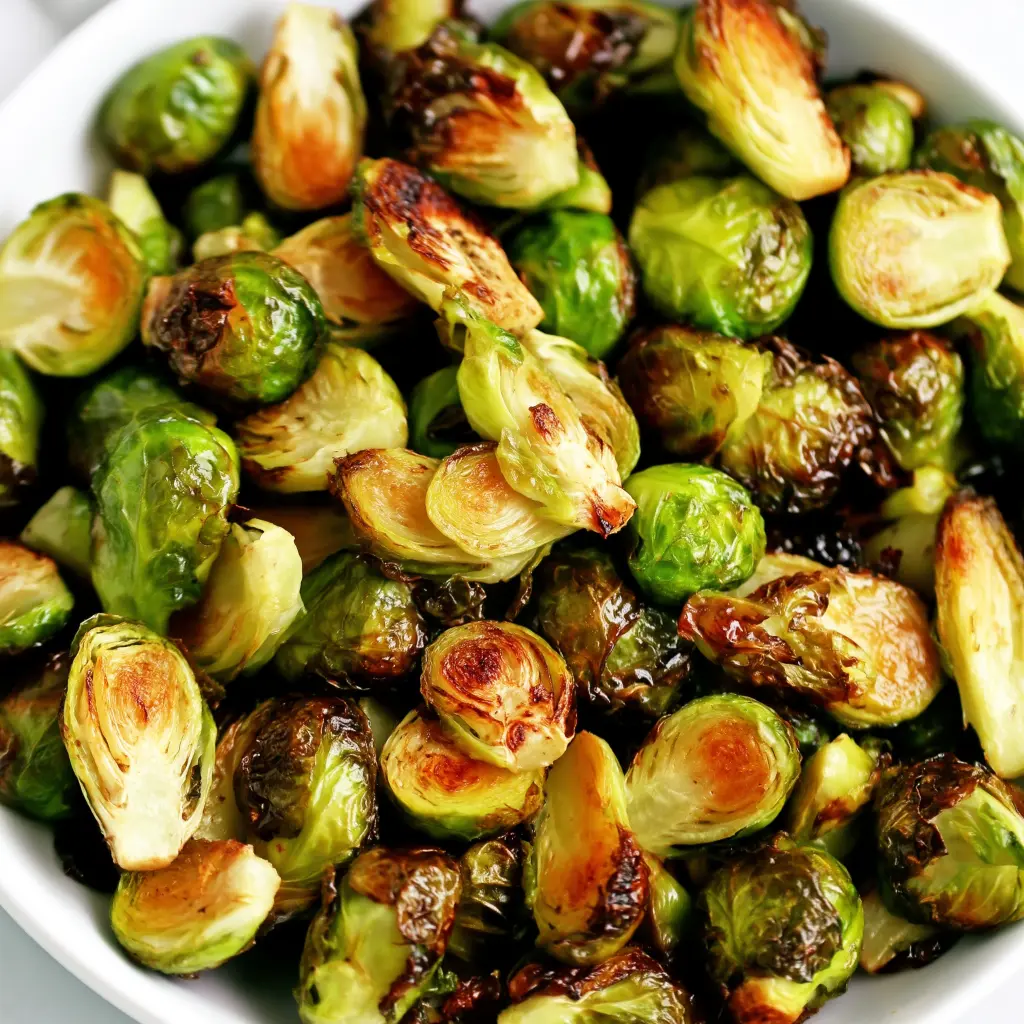
This version is intentionally simple, which makes it easy to dress up once you know the base method works. A squeeze of lemon at the end can brighten the whole pan. A little grated Parmesan can add a salty finish. A pinch of red pepper flakes can bring a touch of heat.
You can also roast the Brussels sprouts until they are deeply browned if you like a stronger char. Some people love the extra crisp leaves and darker flavor, while others prefer them just lightly toasted. Neither is wrong. It depends on how much color you want on the tray.
Another easy change is to add a little garlic during the last few minutes of roasting rather than at the start. That way the garlic gets warm and fragrant without burning on the pan. Even with additions, the main goal should stay the same: let the Brussels sprouts be crisp, browned, and tender.
What to Serve with Roasted Brussels Sprouts
Roasted Brussels sprouts pair well with all kinds of meals because their flavor is savory and direct. They fit naturally beside roast chicken, baked salmon, pork chops, or steak. They are also strong with heavier winter meals because the browned edges cut through richer main dishes nicely.
During holiday season, they can sit beside mashed potatoes, stuffing, and roasted meats without fading into the background. On a regular weeknight, they are useful because they do not ask for much attention. While the sprouts roast, you can work on the rest of dinner.
If you like building a plate with contrast, pair roasted Brussels sprouts with something creamy, something starchy, and a simple protein. The sprouts bring the crisp, roasted element that rounds out the meal.
Common Mistakes to Avoid
A crowded pan is one of the biggest reasons Brussels sprouts do not roast well. If they are packed too tightly, they steam. That means you lose the crisp edges and toasted bottoms that make the dish so appealing. Use a large enough sheet pan and spread them out.
Another common issue is not using enough seasoning. Since Brussels sprouts have a strong vegetable flavor, they need a solid amount of salt and pepper to taste balanced. Taste at the end and adjust before serving.
Roasting time is another place where things can go wrong. Pull them too early and they may be pale and underdone. Leave them far too long and the outer leaves can become too dark before the centers are ready. The sweet spot is when they are crisp on the outside, browned on the bottom, and still tender inside.
Leftovers and Reheating
Roasted Brussels sprouts are best right after baking, when the edges are at their crispest. That said, leftovers are still worth saving. Keep them covered in the refrigerator and reheat them in a hot oven or skillet if you want to bring back some of that roasted texture. The microwave works for speed, but it softens them more.
One thing I like about this recipe is that even leftovers can slide into another meal. You can add them to a grain bowl, serve them beside eggs, or warm them and pair them with leftover chicken or salmon.
Why Simple Brussels Sprouts Deserve a Place in Your Rotation
Not every side dish needs a long ingredient list or a lot of planning. Roasted Brussels sprouts are simple, reliable, and full of texture. They ask for a little cutting, a little seasoning, and enough oven heat to bring out their best side.
If you want a vegetable that tastes homey but still has plenty of character, this is a good one to keep in your regular dinner rotation. Crisp edges, toasted bottoms, and tender centers are more than enough to make roasted Brussels sprouts feel like a side dish worth repeating.

- 15-Minute Chicken Caesar Wrap - May 11, 2026
- Nutella Stuffed Cookies - May 10, 2026
- Honey Glazed Salmon That Makes Dinner Feel Easy - April 28, 2026