Skip to content


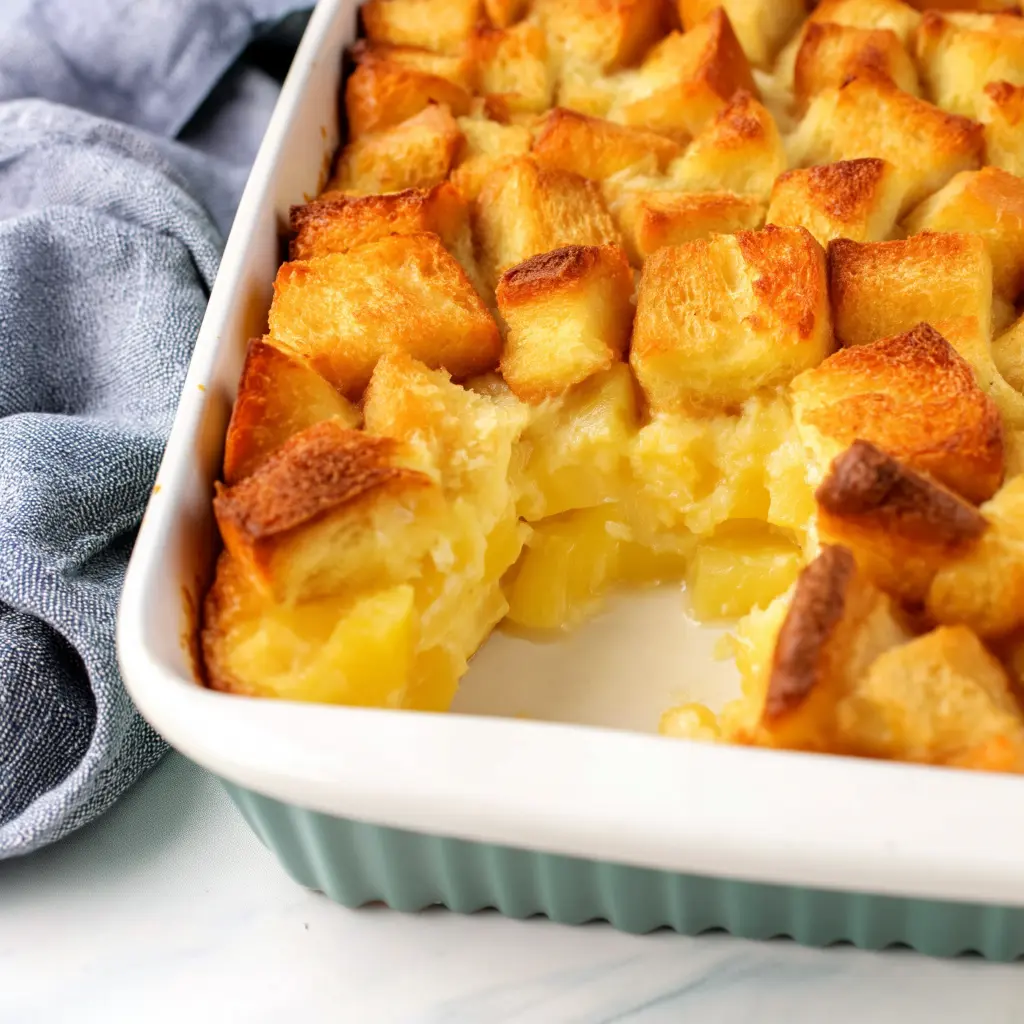
Scalloped Pineapple is one of those old-school dishes that surprises people the first time they try it. At a glance, it looks like it could lean dessert, but once it hits the table next to ham, roast pork, or a big holiday spread, it makes total sense. The butter, eggs, sugar, crushed pineapple, and soft bread bake into a casserole that is lightly sweet, soft in the center, and golden on top. It has that cozy, family-style feel that makes a meal seem a little more special without asking much from the cook.
What makes Scalloped Pineapple so appealing is how simple it is. There is no fancy technique hiding in the background. You whisk together a handful of pantry staples, fold in the bread, pour everything into a casserole dish, and bake. The oven does the rest. The bread soaks up the buttery pineapple mixture, the eggs give it structure, and the top takes on a gentle crispness that balances the soft, custard-like middle.
This is also the kind of recipe that earns a spot in family gatherings because it gives you something a little different from the usual vegetable side dishes. If your table already has savory mains, rolls, and richer casseroles, Scalloped Pineapple brings brightness and sweetness without feeling out of place. It does not try too hard. It just works.
Why You’ll Love This Recipe
One of the nicest things about Scalloped Pineapple is that it feels nostalgic even if you did not grow up with it. It has that old fashioned casserole charm that reads as homey and familiar right away. The ingredient list is short, the prep is quick, and the finished dish has a texture that stands out on a crowded table.
You may also love that this recipe is easy to scale into a gathering. A 13×9-inch casserole dish gives you enough for 12 servings, which makes it useful for Easter, Christmas, Sunday dinners, or any meal where ham is on the menu. Because it bakes in one dish, there is not much cleanup, and because it is best served warm, it slides into a holiday rhythm without stress.
Flavor is another reason this recipe lasts. The pineapple keeps the casserole moist and bright, the butter adds richness, and the sugar gives it a gentle sweetness that feels balanced rather than heavy. Then the bread ties everything together. Instead of feeling like a fruit side dish that sits awkwardly beside dinner, Scalloped Pineapple lands somewhere between casserole, stuffing, and spoon bread. That middle ground is what makes it memorable.
What Goes Into Scalloped Pineapple
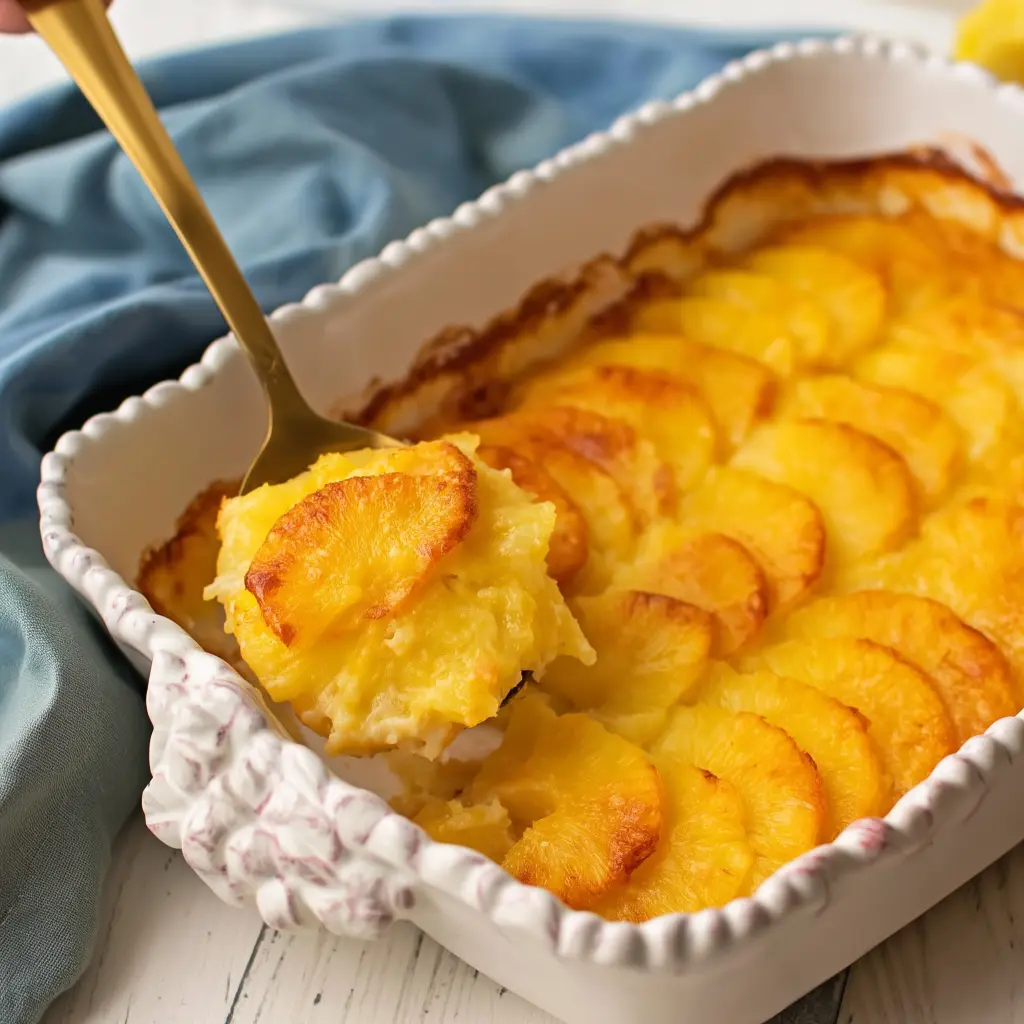
This version keeps things simple and true to the classic style. Melted salted butter gives the casserole richness and a deeper flavor than oil ever could. Sugar sweetens the pineapple and softens its tart edge. Eggs are important here because they help the casserole set as it bakes, which is what gives the middle that soft, spoonable body.
The crushed pineapple, including the juice, is what brings the whole dish together. You want that juice because it moistens the bread and helps form the custard-like base. If you drained it all away, the casserole would lose some of its character. The bread is the last key piece. Soft bread cut into 1-inch cubes absorbs the mixture and bakes into a tender interior with a lightly crisp top.
French bread is a nice option because it holds up well, but the main idea is to use a soft bread that can soak up the pineapple mixture. Day-old bread can also work well, since it tends to absorb liquid nicely without turning mushy too fast.
How to Make Scalloped Pineapple
This is a very friendly recipe, even for a newer cook. Start by greasing a 13×9-inch casserole dish and heating the oven to 350°F. That gives you a ready pan and steady oven temperature right from the start.
In a large bowl, whisk together the melted butter, sugar, eggs, and crushed pineapple with its juice. The mixture will look loose and glossy at this point, and that is exactly what you want. Once everything is combined, fold in the bread cubes. Stir gently so the bread gets coated without being mashed down.
After that, pour the mixture into the prepared casserole dish and spread it out evenly. As it bakes, the eggs set, the bread softens and firms up, and the top starts to turn lightly golden. You are looking for a casserole that is set and no longer wet in the center. That usually takes about 40 to 45 minutes.
The hardest part may be waiting a few minutes before serving. Scalloped Pineapple is especially good warm from the oven, when the top still has a little texture and the middle is soft and fragrant.
Frequently Asked Questions
What bread is best for scalloped pineapple?
Soft bread is the best fit for scalloped pineapple because it absorbs the butter, egg, and pineapple mixture well. French bread is a good choice, especially if it is soft enough to soak up the liquid without turning pasty. Bread that is too dense can make the casserole feel heavy, while very thin sandwich bread can break down too quickly. A loaf with a little body but a soft interior usually gives the nicest texture.
Can I use fresh pineapple?
You can use fresh pineapple, but the recipe as written is built around canned crushed pineapple with juice. That matters because the juice adds moisture and flavor throughout the casserole. If you want a chunkier texture, the notes for this recipe say you can replace the crushed pineapple with pineapple chunks. Use a 20-ounce can and drain off half of the juice before adding the pineapple and the rest of the juice to the mixture. That keeps the casserole from getting too wet while still giving it enough liquid to bake properly.
Is scalloped pineapple a side dish or dessert?
Scalloped pineapple is usually served as a side dish, especially with ham. That said, it does sit close to dessert territory because it is sweet, buttery, and soft in the middle. The reason it works so well as a side is that the sweetness plays nicely against salty or savory mains. If you have never had it before, think of it as a casserole-style side dish with a dessert-like personality.
What to Serve with Scalloped Pineapple Casserole
Ham is the classic partner for Scalloped Pineapple Casserole, and it is easy to taste why. The sweet pineapple and buttery bread balance the smoky, salty flavor of ham in a way that feels almost built into the meal. That contrast is what makes the dish such a favorite for holiday dinners.
It also works well with roast pork, baked ham steaks, or even a roast chicken when you want a side dish with a little personality. If the rest of your menu leans rich, you can balance things with simple vegetables such as green beans, roasted carrots, or a light salad. That gives Scalloped Pineapple room to shine without the table feeling too heavy.
If you are building out a holiday menu, this casserole fits nicely next to mashed potatoes, rolls, and a vegetable side. It brings something sweet, soft, and golden that still feels at home with dinner.
A Few Helpful Notes Before You Bake
Because this casserole is simple, small details matter. Use the pineapple juice that comes in the can unless you are making the chunk substitution noted in the recipe. That liquid helps the bread soften into the right texture. If you are using unsalted butter, add ¼ teaspoon of salt so the flavor does not fall flat.
Try not to overbake it. If it stays in the oven too long, the middle can lose some of that soft texture that makes Scalloped Pineapple so appealing. Start checking near the 40-minute mark, especially if your oven runs hot.
You also do not need to overwork the bread once it goes into the bowl. Fold it in gently and let the casserole do its thing in the oven.
Leftovers and Reheating
If you have leftovers, this recipe keeps well in the refrigerator for up to 5 days. Reheat portions in a 350°F oven if you want to bring back some of the top texture, or warm individual servings in the microwave for a quick option.
This is not a recipe I would freeze either, which matches the note in the recipe card. The texture is part of the appeal, and freezing can change that soft, custard-like center in a way that is not as satisfying.
Scalloped Pineapple is one of those dishes that proves a short ingredient list can still deliver something memorable. It is comforting, easy, and a little unexpected in the best way. If you need a warm side dish that feels right next to ham and still stands out on the table, this recipe earns its place.

- 15-Minute Chicken Caesar Wrap - May 11, 2026
- Nutella Stuffed Cookies - May 10, 2026
- Honey Glazed Salmon That Makes Dinner Feel Easy - April 28, 2026