Skip to content


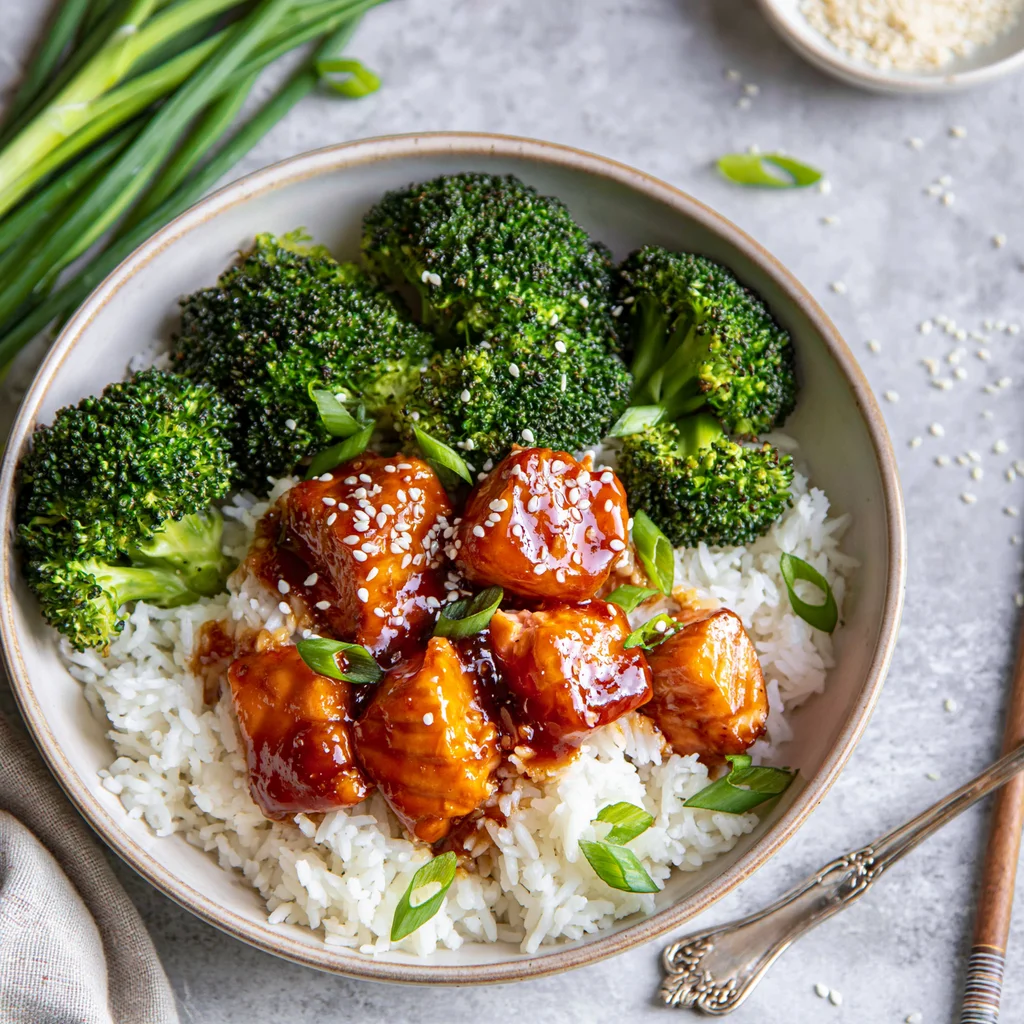
Baked teriyaki salmon gives you tender fish, a glossy sauce finish, and a full plate in about 25 minutes. The oven does most of the work here: the salmon bakes at 400 degrees Fahrenheit while the sauce thickens lightly around the edges and the fish turns opaque and easy to flake.
The main decision is whether to cube the salmon or bake the fillets whole. Cubes cook faster and catch more sauce on their edges. Whole fillets stay a little more protected, especially if you keep the skin side down. Either way, save part of the teriyaki sauce for after baking so the rice and broccoli do not taste plain next to the fish.
Ingredients
- 4 salmon fillets, about 4 ounces each
- 1 batch teriyaki sauce
- To serve
- 2 cups cooked rice
- 2 cups cooked broccoli
- ⅓ cup diced scallion
Ingredient notes: the teriyaki sauce carries nearly all the seasoning, so taste it before it goes over the salmon. It should be savory enough to season the fish, rice, and broccoli together. If the sauce is thick, brush it over the salmon. If it is thinner, spoon it over and let it settle around the fish in the baking dish.
Why cube the salmon or bake it whole
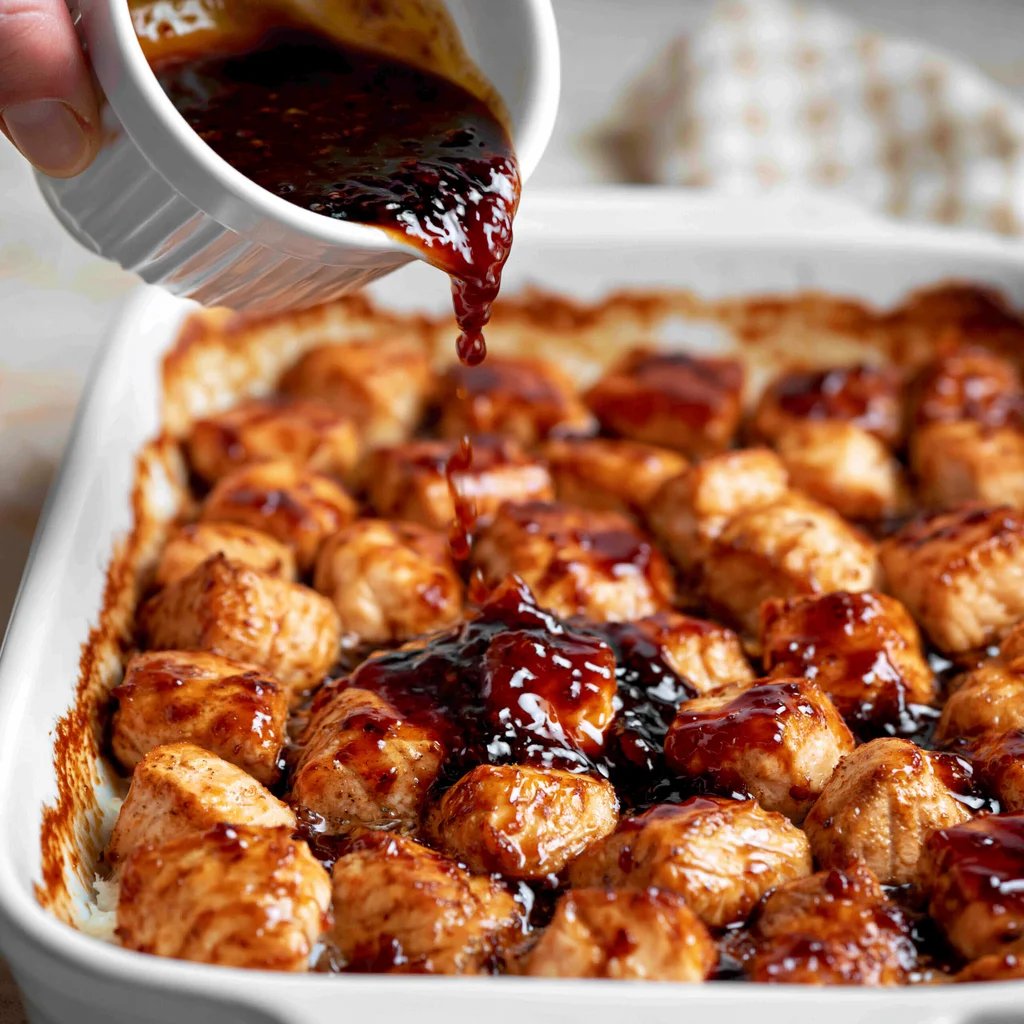
Cubed salmon gives you more sauced edges and a faster cook time. The pieces should be about 1 inch so they cook at a similar pace and stay tender in the center. This is the better route if you want the salmon to sit directly over rice, almost like a bowl topping.
Whole fillets are better when you want a cleaner plate and a slightly gentler bake. Place them skin side down, coat the top with sauce, and let the skin act as a barrier against the hot dish. When the salmon is done, the flesh should lift away from the skin with very little pressure from a fork.
How to make baked teriyaki salmon
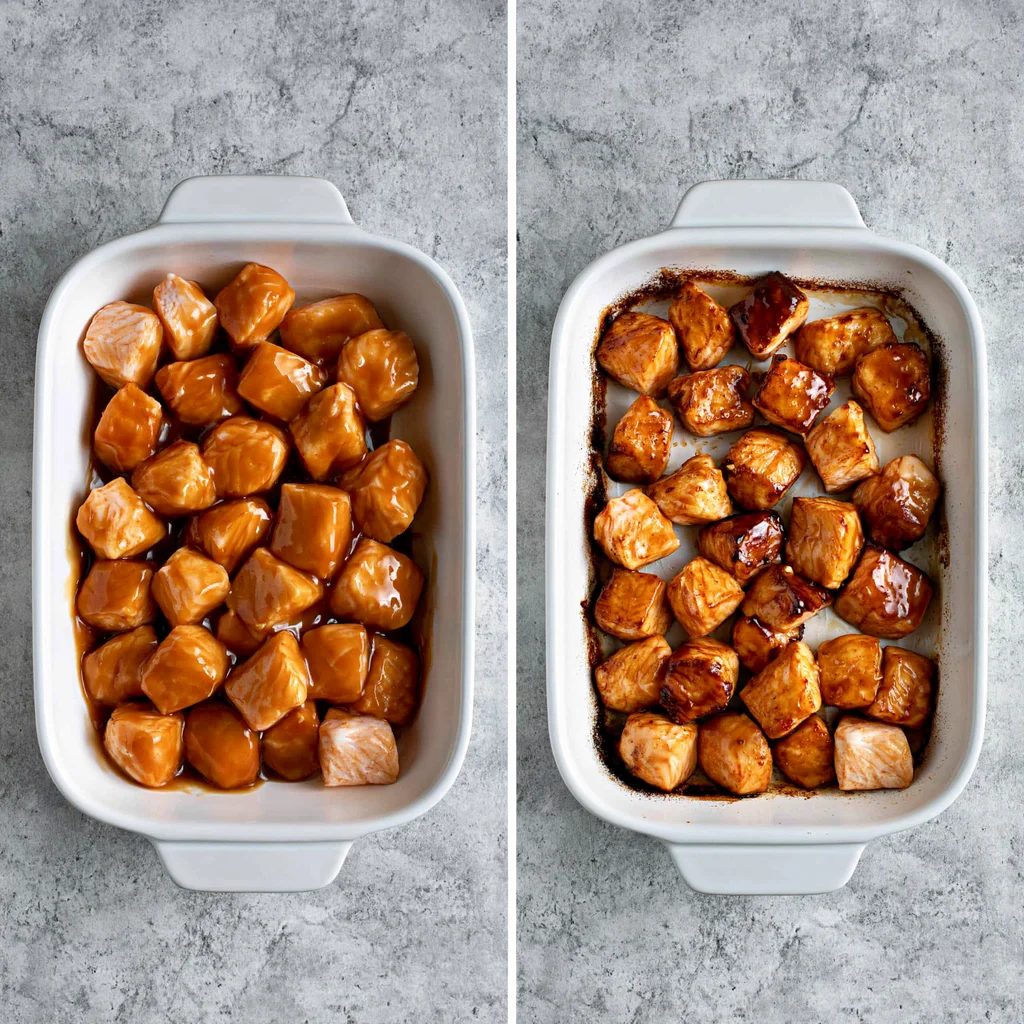
The method is simple, but the cues matter. Start checking early, especially if you cube the fish, because salmon can move from tender to dry quickly.
- If using previously frozen salmon, thaw it in the fridge overnight until the fillets feel flexible but still cold.
- Preheat the oven to 400 degrees Fahrenheit so the sauce begins to gloss over soon after the fish goes in.
- Prepare the teriyaki sauce and taste it on a spoon; it should land savory enough to season the rice and broccoli too.
- Lightly oil the bottom of a baking dish so the sauce can thicken at the edges without sticking hard to the pan.
- Cut the salmon into about 1-inch cubes, or leave the fillets whole if you want larger pieces that flake apart on the plate.
- Coat the salmon with about half of the teriyaki sauce, brushing or spooning until the surface looks evenly glossy.
- If time allows, marinate the salmon for about 20 minutes, just until the surface looks lightly stained by the sauce.
- Bake whole fillets uncovered for 12 to 18 minutes, or cubed salmon for 10 to 14 minutes, until the edges look set and the center turns opaque.
- Check at 10 minutes; whole fillets should flake easily with a fork, and cubes should show even color through the middle.
- Broil for a couple of minutes if you want darker tops, watching closely because the sauce can go from glossy to too dark quickly.
- Toss or drizzle the salmon with the remaining teriyaki sauce while it is warm so the finish tastes saucy rather than dry.
- Serve with cooked rice, broccoli, and diced scallion while the fish is tender and the sauce still coats the surface.
What to taste for in the teriyaki finish
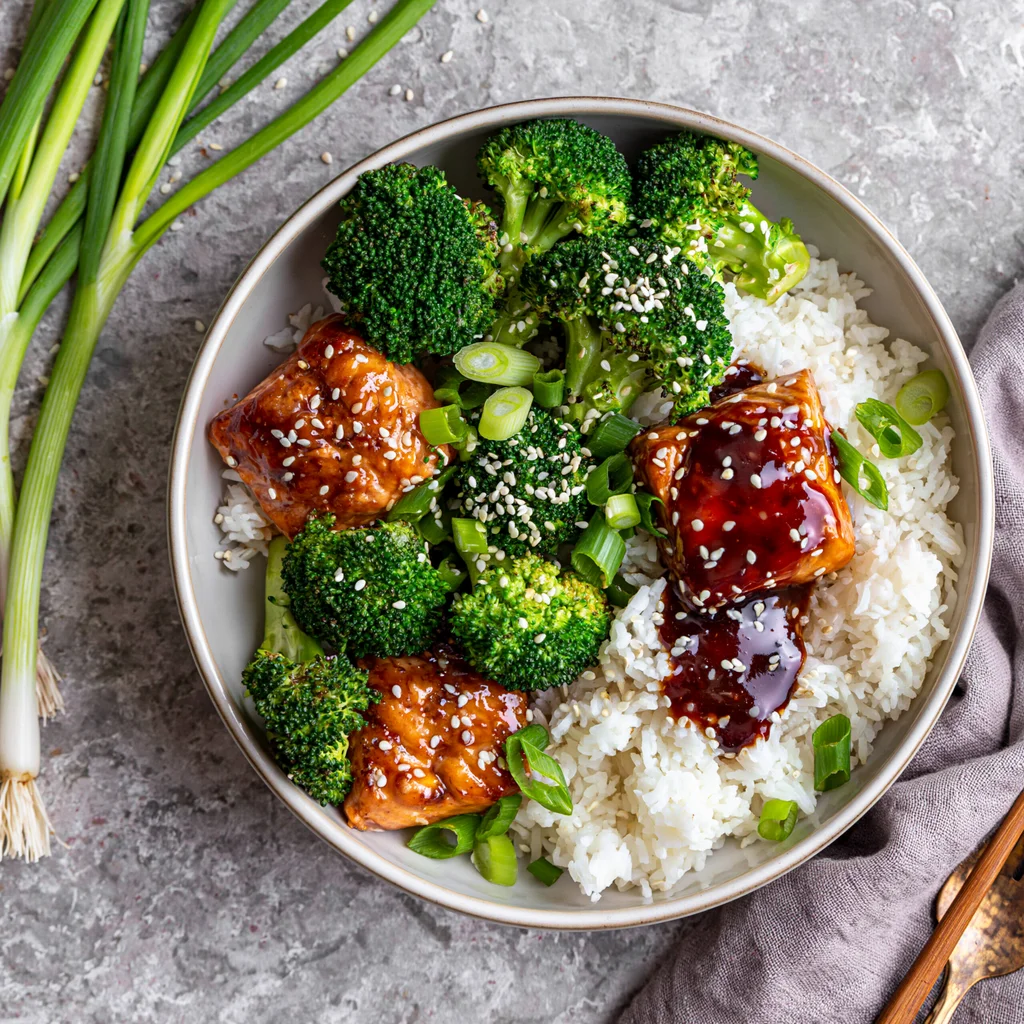
The last spoonful of sauce matters more than it looks. Salmon has enough richness on its own, but rice and broccoli need help from the sauce to taste connected to the fish. Before serving, spoon a little sauce over the rice and take a bite with salmon and broccoli together. If the rice tastes plain, add another small drizzle of the reserved sauce.
The finish should taste balanced, not heavy. The sauce should coat the fish without pooling so much that the salmon feels wet. If the top looks dry after baking, the reserved sauce fixes that better than more oven time.
Serving baked teriyaki salmon with rice and broccoli
Rice and broccoli are the right partners here because they take on the sauce without competing with it. Spoon rice into the bowl first, add broccoli next, then place the baked teriyaki salmon on top so the warm sauce runs down into the grains.
Scallion brings a fresh edge at the end. Add it after baking, not before, so it stays crisp and green. If you use sesame seeds or red pepper flakes as extra finishing touches, add them at the table where you can control the texture and heat. For another salmon dinner with a glossy finish, see this honey glazed salmon.
Frozen salmon, skin, and marinating decisions
For the cleanest texture, thaw frozen salmon overnight in the fridge. The fish should feel cold and pliable before it goes into the baking dish. If you need to cook it from frozen, follow the same oven method and add about 5 minutes to the cook time, checking for the same flake and opaque-center cues.
Keep the skin on if your fillets have it. Place the salmon skin side down, brush the sauce over the top, and let the skin protect the bottom of the fish from direct heat. After baking, the flesh should slide away from the skin easily.
The marinating window in this recipe is short for a reason. About 20 minutes gives the sauce time to season the surface without making the fish sit too long. If you are hungry, skip the marinating step and bake right away; the reserved sauce at the end still gives the dish a strong finish.
About air fryer timing
This version is written for the oven, where the salmon sits in a baking dish with sauce around it. An air fryer moves heat more aggressively, so I would not give a fixed air fryer time without testing it in that setup. If you adapt it, use the same doneness cues: the salmon should flake with a fork, cubes should be even in color, and the sauce should look glossy rather than scorched.
Storage
Let leftover baked teriyaki salmon cool completely before moving it to an airtight container. Store it in the fridge for about 2 days, following USDA leftover safety guidance for cooked food. Reheat gently on the stove or in the oven until warmed through, adding a small spoonful of reserved sauce if the fish looks dry. The rice and broccoli can be stored with the salmon, but the scallions taste fresher when added after reheating.
Tester’s note: If the finished bowl tastes flat, I do not reach for extra heat first. I spoon a little more reserved teriyaki sauce over the rice and broccoli, then add scallion so the fresh bite pulls the plate back into balance.
Frequently asked questions
How do I know when baked teriyaki salmon is done?
Check the salmon at 10 minutes. Whole fillets should flake easily with a fork and pull away from the skin. Cubed salmon should look evenly opaque through the center.
Can I bake the salmon fillets whole instead of cutting them?
Yes. Place the fillets skin side down in the baking dish, brush the top with about half of the sauce, and bake for 12 to 18 minutes depending on thickness. Serve with oven roasted sweet potatoes if you want a side that can take on the sauce.
Can I cook this salmon from frozen?
Yes, but the texture is cleaner when the salmon thaws overnight in the fridge. If cooking from frozen, use the same method and add about 5 minutes, then check for flaking and even color.
How long should salmon marinate in teriyaki sauce?
This recipe uses about 20 minutes when you have time. That is enough for the surface to take on sauce while keeping the fish tender. A spoonful of pineapple mango salsa is a bright finish if you want fruit and heat with the teriyaki.
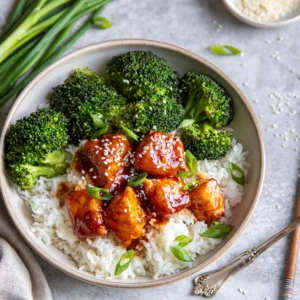
Baked Teriyaki Salmon
Equipment
- Baking dish
Ingredients
- 4 salmon fillets about 4 ounces each
- 1 batch teriyaki sauce
To serve
- 2 cups cooked rice
- 2 cups cooked broccoli
- 1/3 cup diced scallion
Instructions
- If using previously frozen salmon, let it defrost in the fridge overnight until cold and flexible.
- Preheat the oven to 400 degrees Fahrenheit.
- Prepare the teriyaki sauce.
- Lightly oil the bottom of a baking dish to prevent sticking.
- Cut the salmon into about 1-inch cubes, then cover with about half of the teriyaki sauce.
- For whole fillets, place the salmon skin side down in the baking dish and brush the top evenly with about half of the teriyaki sauce.
- Bake right away, or let the salmon marinate for about 20 minutes so the surface takes on some of the sauce.
- Bake whole fillets uncovered for 12 to 18 minutes, depending on thickness and doneness preference. Bake cubed salmon for 10 to 14 minutes.
- Check at 10 minutes. Whole fillets should flake easily with a fork and slide off the skin. Cubed salmon should be even in color throughout.
- Broil for a couple of minutes if desired, watching closely so the tops darken without burning.
- Toss or drizzle the salmon with the remaining teriyaki sauce, reserving some for rice or steamed vegetables if desired.
- Sprinkle with diced scallions before serving.
Notes

- 15-Minute Chicken Caesar Wrap - May 11, 2026
- Nutella Stuffed Cookies - May 10, 2026
- Honey Glazed Salmon That Makes Dinner Feel Easy - April 28, 2026