Skip to content


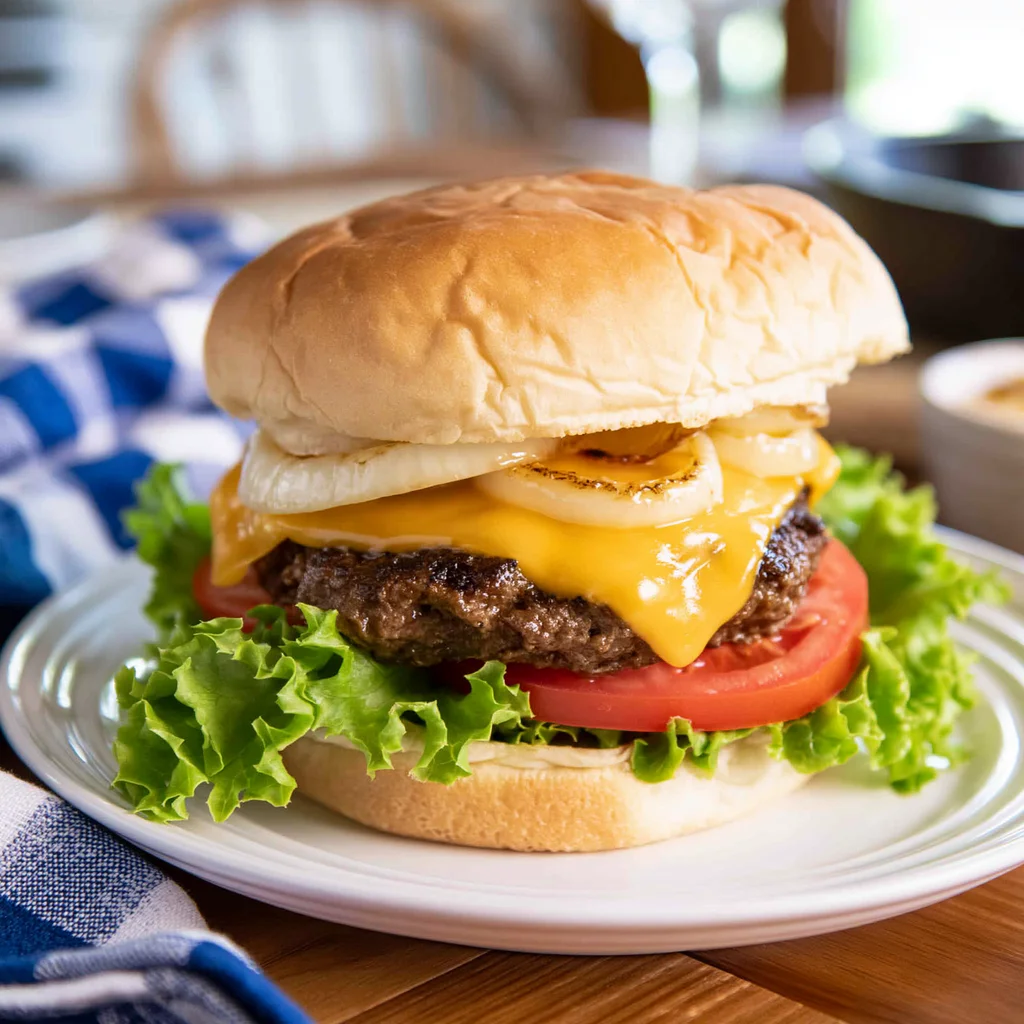
This beef burger recipe keeps the ingredient list short, but the seasoning has a clear job. Dijon mustard brings a small tang, Worcestershire sauce adds savory depth, and cracked pepper keeps the finish direct instead of heavy.
The main thing to protect is texture. Ground beef gets firm when it is packed too tightly, so the mixing and shaping matter as much as the heat. Work lightly, keep the patties even, and let the grill or skillet do the browning without pressing the meat.
Ingredients
- 2 pounds ground beef
- 1 teaspoon cracked pepper
- 1 teaspoon kosher salt
- 2 tablespoons Dijon mustard
- 1 ½ tablespoons Worcestershire sauce
- To serve
- Hamburger buns, grilled until lightly marked
- Lettuce, leaves dried so the bun stays firm
- Tomato, sliced
- Cheese
- Onions, sliced
Use ground beef that feels cold and loose when you open the package. Cold beef shapes more cleanly and gives you a softer bite after cooking. For toppings, dry the lettuce and tomato well so the burger stays structured from the first bite to the last. If you keep extra ground beef on hand, use it for stuffed bell peppers with ground beef and rice.
Why Dijon and Worcestershire work in the beef
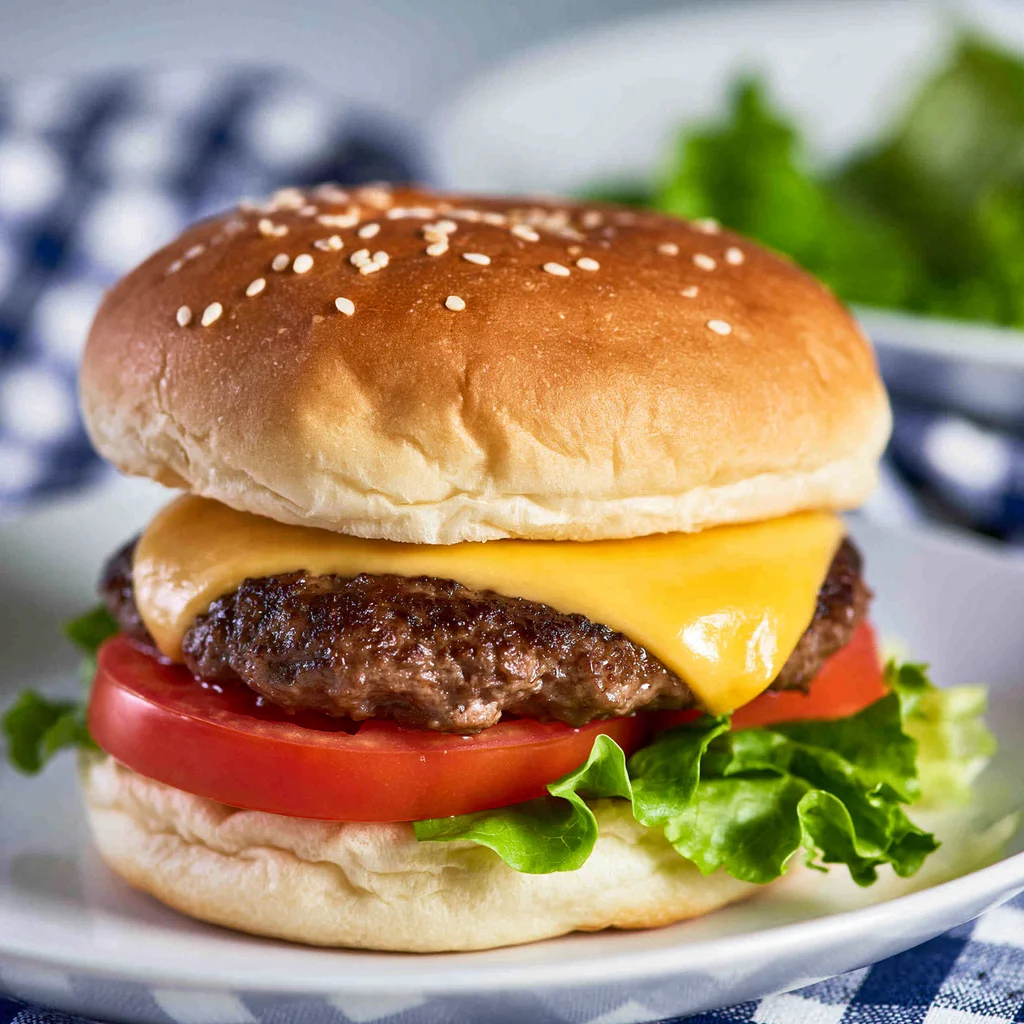
Dijon mustard does not make the burger taste like mustard when it is measured this way. It gives the beef a small tang that cuts through the fat. Worcestershire sauce brings salt, depth, and a savory edge, so the burger tastes seasoned through the patty instead of only on the surface.
Because both ingredients are wet, the beef should be mixed gently. Stop when the mustard and sauce are spread through the meat and the mixture looks even. If you keep squeezing after that point, the texture tightens and the cooked patty can feel dense.
Shaping patties without packing the beef
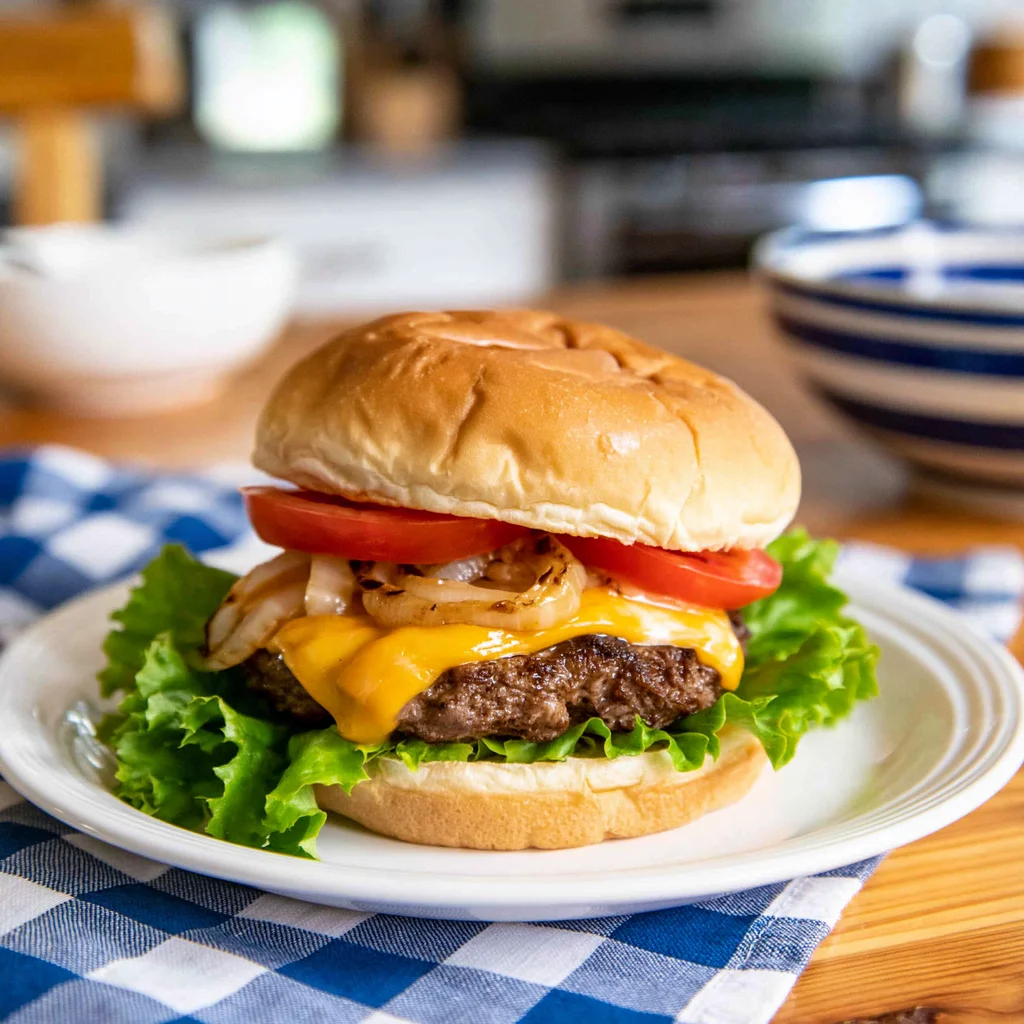
Eight patties from 2 pounds of beef gives each burger a clear portion. Divide the mixture first, then shape. That keeps the patties close in size, which helps them cook at the same pace. Press the center slightly thinner than the edges if your patties are thick; the shape helps the burger cook evenly as it tightens over the heat.
The patties should hold together without looking smooth and compressed. A slightly rough surface is fine. Those uneven edges brown well and keep the burger from eating like a pressed meatloaf.
How to make this beef burger recipe
Use a grill or a heavy skillet and bring the heat up before the patties go on. The first contact with high heat is what gives the outside color while the center stays tender.
- Combine the ground beef, cracked pepper, kosher salt, Dijon mustard, and Worcestershire sauce in a bowl, mixing just until the streaks disappear and the beef still looks loose.
- Divide the mixture into 8 portions and gently shape them into patties, keeping the edges even and the surface lightly textured rather than packed smooth.
- Heat a grill or skillet to high until the surface looks hot and a small bit of beef would sizzle on contact.
- Cook the patties for 2 to 3 minutes per side, leaving them still so the first side browns before you turn them and checking thicker patties against the safe minimum internal temperature for ground meat.
- Cook longer if the patties are thicker, watching for browned edges and a center that firms as it finishes.
- Serve on grilled hamburger buns with lettuce, tomato, cheese, and onions, adding pickles if you want a sharper finish.
Tester’s note: I do not press these patties while they cook. If the first bite tastes flat, I add a tiny pinch of salt to the tomato or onion rather than mixing more into the beef after cooking. That keeps the patty tender while pulling the toppings into balance.
What to taste for after the first bite
A good beef burger should taste savory and full without feeling heavy. The salt should be present, the pepper should show up at the finish, and the Dijon should read as brightness rather than mustard. If the burger tastes flat once it is built, the fix is often in the toppings: salt the tomato lightly, add pickles, or use onion for a sharper edge.
If the patty tastes salty on its own, build the burger with lettuce, tomato, and a plain bun before adding more sharp toppings. A burger is eaten as a stack, so the finished bite matters more than the patty tasted alone.
Grill and skillet cues
On a grill, look for clean marks and browned edges before turning. On a skillet, listen for a steady sizzle. If the pan goes quiet, it may not be hot enough. If the surface darkens too fast before the center firms, lower the heat slightly after the first side browns.
Do not move the patties around the pan. Letting them sit gives the surface time to brown. Turn once, then give the second side the same chance to build color. This is also why pressing is not helpful; it forces out juices and makes the burger feel drier. For another browned dinner with a savory finish, serve Hawaiian meatballs on a night when patties are not the plan.
Serving the burgers
Grilled buns matter here because the filling is juicy and the toppings add moisture. Toast or grill the cut sides until they feel firm enough to hold the beef without bending. Add lettuce under the patty if you want a barrier between the beef and bun, or place cheese directly over the hot patty so it softens from the heat.
Serve the burgers immediately. The texture is at its strongest while the patty is hot, the bun is still firm, and the vegetables are cool against the beef. For a baked dinner with the same casual table feel, keep pizza casserole in the rotation.
Storage
Cooked patties can be stored after they cool. Keep the patties separate from buns, lettuce, tomato, cheese, and onions so the bread and vegetables do not soften. Reheat the patties gently in a skillet until hot through, using the leftover reheating guidance as your safety check, and the edges regain a little color.
For the cleanest texture, shape only as many patties as you plan to cook right away. If you shape ahead, keep the patties cold until cooking so they hold together when they hit the heat.
Frequently asked questions
Can I make these beef burger patties ahead?
Yes. Shape the patties, cover them, and keep them cold until cooking. Cold patties hold their shape better, and the texture stays cleaner when they go straight from the refrigerator to the hot grill or skillet.
Why should I avoid pressing burgers while they cook?
Pressing pushes juices out of the patty. Let the meat sit against the hot surface so the outside browns and the center stays tender.
Can I cook this beef burger recipe in a skillet?
Yes. Use a hot skillet and give each patty enough room. The patties should sizzle as soon as they touch the pan, then brown before turning.
What toppings work well with Dijon and Worcestershire burgers?
Lettuce, tomato, cheese, onions, and pickles all fit this seasoning. Tomato brings moisture, onion adds sharpness, and pickles give the finished burger a brighter edge.
Best Beef Burger Recipe
Equipment
- Mixing bowl
- Grill or skillet
Ingredients
- 2 pound ground beef
- 1 teaspoon cracked pepper
- 1 teaspoon kosher salt
- 2 tablespoons Dijon mustard
- 1.5 tablespoons Worcestershire sauce
To Serve
- hamburger buns
- lettuce
- tomato sliced
- cheese
- onions sliced
Instructions
- Mix ground beef with cracked pepper, kosher salt, Dijon mustard, and Worcestershire sauce until the seasonings look evenly distributed.
- Form the mixture gently into 8 patties, keeping the texture loose rather than tightly packed.
- Heat a grill or skillet to high until the cooking surface is hot enough for the patties to sizzle on contact.
- Cook patties for 2 to 3 minutes per side, allowing extra time for thicker patties and watching for browned edges.
- Serve on grilled hamburger buns with lettuce, tomato, cheese, and onions while the buns are still firm and warm.
- Serve immediately.
Notes

- 15-Minute Chicken Caesar Wrap - May 11, 2026
- Nutella Stuffed Cookies - May 10, 2026
- Honey Glazed Salmon That Makes Dinner Feel Easy - April 28, 2026