Skip to content


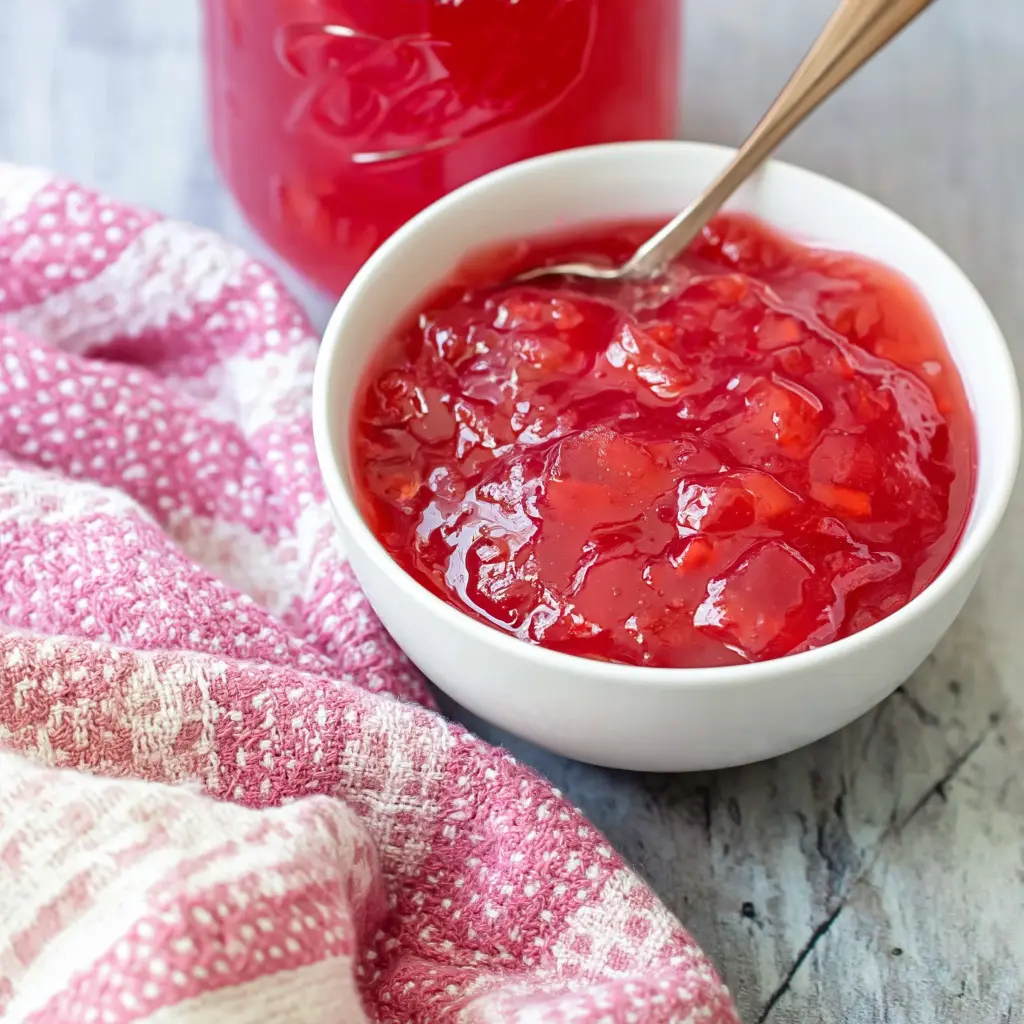
Rhubarb jam is one of those small kitchen projects that gives back more than it asks for. It turns a short ingredient list into something sharp, sweet, and deeply useful. A spoonful can wake up toast, cut through a rich breakfast, or give a plain bowl of yogurt a little spark. This version keeps things especially approachable because it is made with just rhubarb, sugar, lemon juice, and optional ginger. There is no added pectin, no long ingredient list, and no need to turn it into something fussy.
What makes this rhubarb jam especially appealing is the method. The fruit sits with the sugar overnight, which gives the rhubarb time to release its juices before it ever hits the stove. That means the cooking feels less rushed, and the finished jam has a softer, more natural set. It also gives the rhubarb time to keep some of its character rather than cooking down into a flat, one-note spread.
This is the kind of recipe that feels practical in a real kitchen. You cut the rhubarb, cover it with sugar, let time do some of the work, then finish the jam the next day. That rhythm makes it easier than a same-day preserve that asks you to rush through every step at once. And once the jars are filled, you end up with a batch of rhubarb jam that feels bright, homemade, and worth keeping around.
It is also a very flexible preserve. You can spoon rhubarb jam over French toast, swirl it into a yogurt parfait, or set it out as part of a breakfast spread when you want something fruity that is not overly heavy. It brings tartness, sweetness, and a little personality to the table, which is exactly what makes it so satisfying.
Easy rhubarb jam
This rhubarb jam is easy in the way that matters most. It does not try to save time by piling on extra ingredients or special products. Instead, it gives the fruit and sugar a long rest together first, which makes the next step much smoother. By the time you move the mixture to the pan, the rhubarb has already started to soften and release liquid, so the jam comes together more naturally on the stove.
That method is part of why the finished jam tastes so good. Rhubarb already has a clear tart edge, and the sugar softens it without covering it up. Lemon juice keeps the flavor lively, and ginger, when used, adds a gentle warm note that works very well with the fruit. Even with the ginger, though, this remains a rhubarb jam first. The fruit still leads.
Another nice thing about this recipe is the size. It is not trying to produce an overwhelming number of jars. It feels like a manageable batch, which makes it especially good for anyone new to jam making or for anyone who wants a small preserve without turning the whole day over to it.
Do I need pectin?
No, not for this recipe. This rhubarb jam is written as a no-pectin preserve, which means the set comes from cooking the fruit and sugar to the right point rather than adding commercial pectin. That gives the jam a softer, more old-fashioned texture. It may not set as stiffly as a pectin jam, but that is part of the charm. It spreads easily, spoons nicely, and still feels thick enough to count as jam.
That said, no-pectin jam asks for a little patience. You need to let the mixture cook until it reaches setting point rather than expecting it to thicken the minute it boils. The lemon juice helps, and the sugar does important work too, but the main thing is letting the fruit reduce enough for the texture to come together.
If you prefer a firmer set in general, pectin-based jams can be a good fit. This recipe simply is not built that way. It is made for a softer rhubarb jam with a more relaxed texture and a fruit-forward taste.
Jam or conserve: what’s the difference?
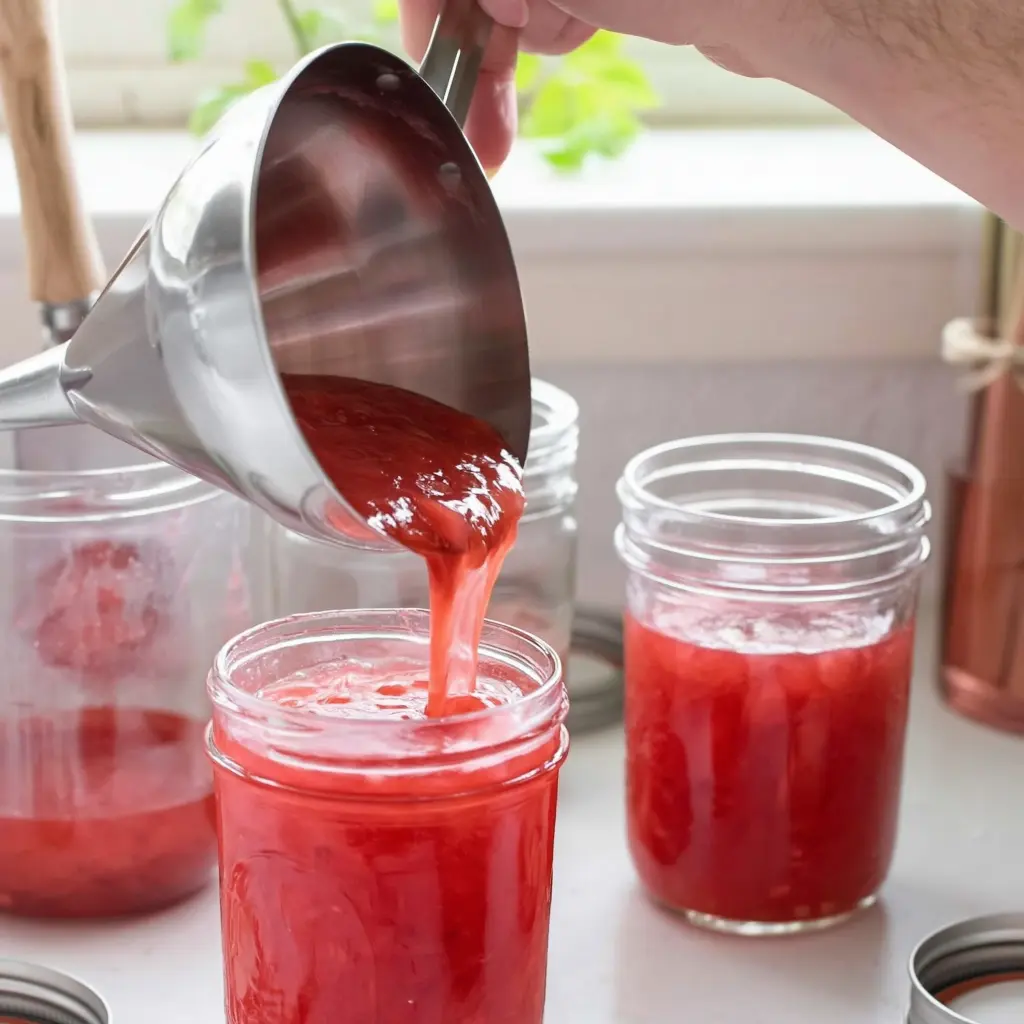
People often use the words loosely, and in home kitchens that is understandable. In everyday use, this recipe will function exactly like rhubarb jam. You spoon it, spread it, and store it the same way you would another fruit jam.
If you want the more traditional distinction, the National Center for Home Food Preservation notes in its guide to types of jellied products that conserves are jam-like products that may combine fruits and often include additions such as nuts, raisins, or coconut. This recipe is called a conserve method more because of its style and long sugar steep than because it follows that exact mixed-fruit pattern.
So in practical terms, you can think of this as rhubarb jam made with a slower, preserve-style approach. The overnight rest gives it a more traditional feel, but once it is in the jar, you will use it like jam.
Checking the set
The set is one of the most important parts of rhubarb jam, especially when there is no added pectin involved. The recipe notes a few ways to check it, and it is worth paying attention here rather than guessing. If the jam is undercooked, it may stay thinner than you want. If it cooks too long, the texture can turn too thick and the fruit flavor can lose some freshness.
One way to judge the set is by temperature. The recipe notes 105°C / 221°F as a guide, which is a familiar marker for many jams. Another method is the chilled plate test, where a little jam is dropped onto a cold plate and checked after a moment to see how it wrinkles or settles. You can also watch how the jam falls from a spoon. When it moves from a light drip to a heavier sheet-like fall, it is getting much closer.
Because rhubarb jam can look a little loose while it is still very hot, it helps to remember that it will firm up as it cools. You are aiming for a jam that sets, not a candy-like pot of fruit paste.
Jam making 101
A recipe like this is a good reminder that jam making does not have to feel intimidating. The main things are clean jars, good timing, and steady attention once the boil begins. The overnight sugar step does some of the early work for you, but once the jam is on the stove, it is worth staying close and stirring as needed so it cooks evenly.
It is also a good idea to have your jars ready before the jam reaches its final stage. Warm jars, clean lids, and a clear counter make the last part feel much calmer. Since jam moves quickly once it reaches setting point, it helps to have that side of the job already in order.
Rhubarb jam is a good recipe for getting comfortable with the rhythm of preserving because the ingredient list is short and the flavor is easy to recognize. You can taste the fruit, notice the balance of sugar and acid, and get a better feel for what a no-pectin jam is supposed to look like.
How to check your jars have sealed
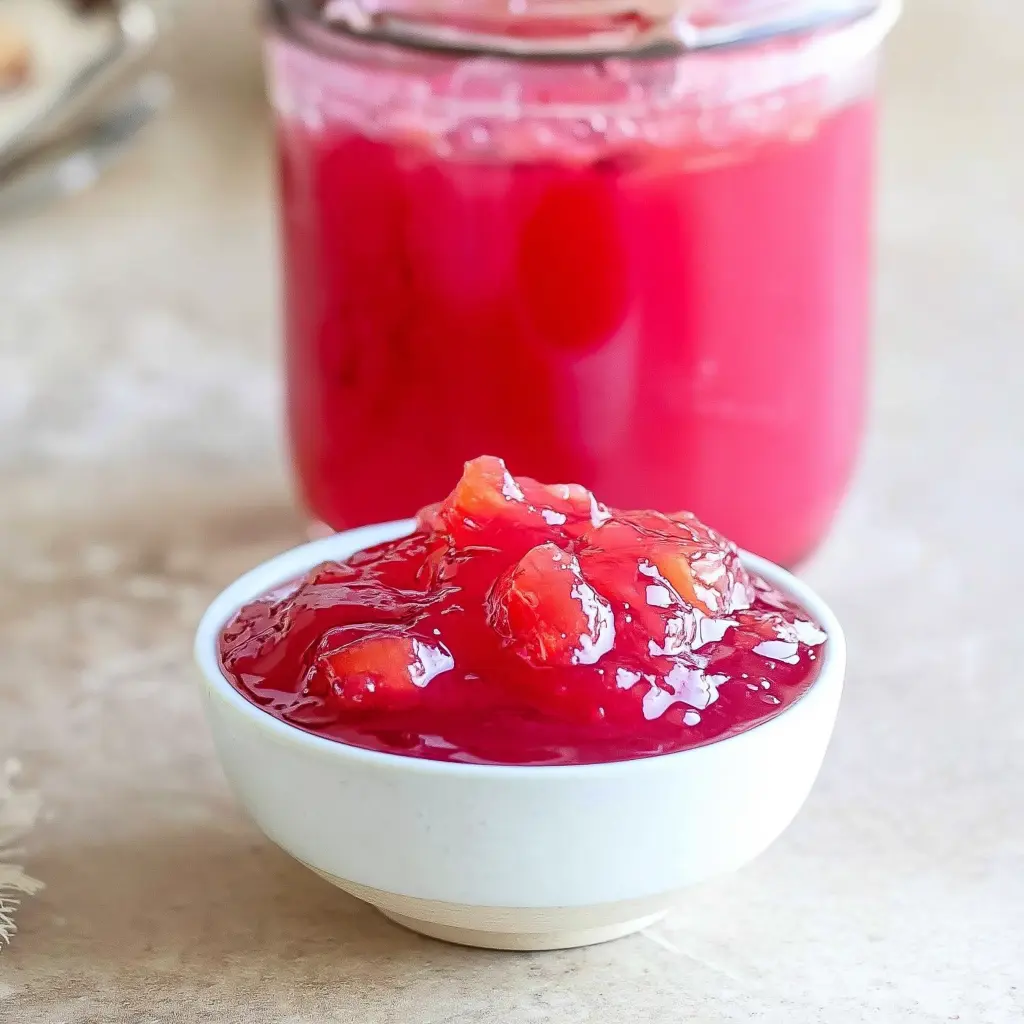
Once the rhubarb jam is jarred, the next step is checking that the lids have sealed properly. This matters because a pretty jar is not the same thing as a safely sealed jar. The National Center for Home Food Preservation has a useful guide on cooling jars and testing jar seals, including the familiar lid check after the jars have cooled.
In home practice, that usually means letting the jars cool undisturbed, then checking whether the center of the lid stays down when pressed. A lid that pops back up is not sealed. If a jar does not seal, it is usually best treated as a refrigerator jar for near-term use unless you are following a current tested preservation method that allows reprocessing.
This part of jam making can feel small, but it is one of the most important checks in the whole process. A good seal is part of what makes the finished rhubarb jam feel dependable.
Rhubarb Jam – Hints Tips and Variations
There are a few simple ways to make this rhubarb jam fit your taste a little more closely without changing the recipe’s basic character. Ginger is the most obvious one. It adds warmth and a little extra depth, but it should stay in the background rather than take over.
Another tip is to cut the rhubarb into even pieces. That helps it soften more evenly during the steep and the cook. It also gives the finished jam a more consistent texture. And while it can be tempting to rush the boil, slower attention gives you a much better chance of catching the set at the right moment.
This is also the kind of preserve that rewards clean flavor choices. Since rhubarb is naturally tart and distinctive, it does not need a lot of additions to feel complete. Even the lemon juice is really there to support the fruit rather than change it.
Flavour variations
The optional ginger is already a nice variation, but you can think in small adjustments rather than big changes. A little more lemon juice will push the jam brighter and sharper. Less ginger will keep the rhubarb more central. The best variations are the ones that still let the fruit stay recognizable.
Rhubarb jam also works beautifully as a topping rather than just a toast spread. It can be spooned onto pancakes, folded into plain yogurt, or set alongside simple baked goods when you want a tart fruit note on the plate.
Troubleshooting
If your rhubarb jam seems too loose, the most common reason is that it simply needed a little more cooking time. With no added pectin, the set depends on reduction and temperature. If it seems too stiff, it may have cooked a bit past the point you wanted.
Crystals can also happen in fruit preserves when sugar does not dissolve as evenly as it should. Keeping the heat steady and stirring as needed early in the cook can help. And if the flavor seems too sharp, that usually softens a little after the jam has cooled and rested.
How long does rhubarb jam last?
How long rhubarb jam lasts depends on how it is stored. In the refrigerator, a jar for regular use should be kept cold and handled with a clean spoon each time. For longer storage of properly preserved jars, the National Center for Home Food Preservation has a useful page on storing home-canned jams and jellies, including notes on seal condition, spoilage signs, and quality over time.
In practical terms, the biggest things to watch are the seal, the smell, and the surface of the jam. If you see mold, fermentation, or other spoilage signs, the jar should be discarded. For everyday use after opening, it is best to keep the rhubarb jam refrigerated and return it promptly after each use.
This is a small recipe, but that is part of the beauty of it. You do not need a pantry lined with jars to feel like the batch was worthwhile. One or two jars of bright, tart rhubarb jam can be plenty, especially when they make breakfast feel a little more thoughtful and a little more homemade.

- 15-Minute Chicken Caesar Wrap - May 11, 2026
- Nutella Stuffed Cookies - May 10, 2026
- Honey Glazed Salmon That Makes Dinner Feel Easy - April 28, 2026